 ChipApex | Global Electronic Components Supplier
SEARCH
Search Product
Search Post
— IC芯片 | 连接器 | 传感器 | 被动器件 —
Search productSearch post
— IC芯片 | 连接器 | 传感器 | 被动器件 —
Consult the customer manager about the wholesale price.
consultation hotline:86-132-6715-2157
email:[email protected]
Contact the product manager for consultation. One-stop consultation is available.
Do you want a lower wholesale price? Please send us your inquiry and we will reply immediately.
The XDPL8105XUMA1 is a digital flyback controller IC from Infineon Technologies, designed for AC-DC LED lighting applications. It operates within a supply voltage range of 6 V to 24 V and supports an adjustable output voltage. The device utilizes a flyback topology with a single channel and features a switching frequency of 180 kHz. It is housed in a DSO-8 package and functions reliably across a temperature range of -40°C to +85°C. Key electrical characteristics include high power factor (up to 0.99) and low total harmonic distortion (<10%).
Verify the specific ordering suffix XUMA1 to confirm the reel packaging format and moisture sensitivity level. Ensure compatibility with the PG-DSO-8 footprint during PCB layout. Confirm RoHS3 compliance status if required by regional regulations. Cross-reference the manufacturer part number with distributor codes to avoid substitution errors. Validate that the selected variant matches the required operating temperature range for the target environment.
Select this component for applications demanding high efficiency and excellent power factor correction without complex secondary circuitry. The digital nature allows for flexible parameterization via .dp Interface Gen2 tools. Consider the 180 kHz switching frequency when designing magnetic components. Evaluate the need for primary-side regulation versus secondary sensing based on accuracy requirements. Ensure the input voltage range aligns with the specific AC mains or DC source being utilized.
The XDPL8105XUMA1 belongs to Infineon's XDP™ digital power family, specifically engineered for LED lighting drivers. It serves as a drop-in replacement and upgrade for the ICL8105, offering improved performance metrics. This series integrates digital signal processing with power conversion stages to minimize external component count. It is categorized under LED Lighting Drivers and Mixed Signal ICs within the manufacturer's portfolio.
The ICL8105 is documented as a predecessor part, with the XDPL8105 serving as its drop-in replacement and upgrade. Verify pin-to-pin compatibility before substituting. Check for any differences in thermal characteristics or control loop stability between the legacy and updated models.
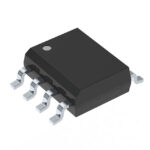 XDPL8105XUMA1
The activity of extra discounts on wholesale prices is in full swing…
Please fill in your contact information and we will send you the latest wholesale price list.





