 ChipApex | Global Electronic Components Supplier
SEARCH
Search Product
Search Post
— IC芯片 | 连接器 | 传感器 | 被动器件 —
Search productSearch post
— IC芯片 | 连接器 | 传感器 | 被动器件 —
Consult the customer manager about the wholesale price.
consultation hotline:86-132-6715-2157
email:[email protected]
Contact the product manager for consultation. One-stop consultation is available.
Do you want a lower wholesale price? Please send us your inquiry and we will reply immediately.
The XR17C158IV-F is an octal Universal Asynchronous Receiver/Transmitter (UART) integrated circuit designed for PCI bus applications. It features eight independent UART channels, each equipped with a 64-byte FIFO buffer to manage data throughput efficiently. The device supports high-speed serial communication with a maximum data rate of 6.25 Mbps and operates within a supply voltage range of 4.5V to 5.5V. It integrates automatic flow control and IrDA encoder/decoder capabilities, supporting RS485 protocols. Packaged in a 144-LQFP (20x20 mm) surface-mount format, it is suitable for industrial environments operating between -40°C and +85°C.
This component has been officially discontinued by the manufacturer as of June 2022. Verification of authenticity is critical when sourcing from secondary markets, as availability is limited to existing stock. Buyers should confirm the specific revision level and ensure compatibility with replacement components before procurement. Due to the end-of-life status, lead times may vary significantly among distributors.
Engineers replacing this part should consider the XR17V358IB176-F as a manufacturer-recommended alternative. While the replacement offers enhanced performance with larger FIFOs and PCIe support, pinout and software compatibility must be verified. Designers migrating from this legacy PCI UART should evaluate power consumption differences and ensure that the target system supports the interface requirements of the successor device without significant hardware modifications.
The XR17C158 belongs to the MaxLinear XR17C158 series of multi-port UARTs. It was widely used in legacy computing and industrial control systems where PCI expansion was standard. The device represents a transition point in serial interface technology, offering high channel density compared to earlier quad-channel solutions. Its discontinuation reflects the industry shift away from PCI toward modern interconnect standards like PCIe and USB.
The XR17V358IB176-F is the manufacturer-recommended substitute. It provides similar functionality but includes upgraded features such as 256-byte FIFOs and PCIe interface support. Engineers must verify mechanical fitment and electrical compatibility during migration.
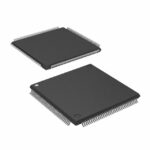 XR17C158IV-F
The activity of extra discounts on wholesale prices is in full swing…
Please fill in your contact information and we will send you the latest wholesale price list.





