 ChipApex | Global Electronic Components Supplier
SEARCH
Search Product
Search Post
— IC芯片 | 连接器 | 传感器 | 被动器件 —
Search productSearch post
— IC芯片 | 连接器 | 传感器 | 被动器件 —
Consult the customer manager about the wholesale price.
consultation hotline:86-132-6715-2157
email:[email protected]
Contact the product manager for consultation. One-stop consultation is available.
Do you want a lower wholesale price? Please send us your inquiry and we will reply immediately.
The XRT86VL32IB is a dual-channel DS1/E1/J1 framer and Line Interface Unit (LIU) integrated circuit manufactured by MaxLinear. It operates within an industrial temperature range of -40°C to +85°C and utilizes a 225-pin Plastic Ball Grid Array (PBGA) package. The device supports data rates of 1.544 Mbit/s, 2.048 Mbit/s, 4.096 Mbit/s, and 8.192 Mbit/s, with multiplexed support for 12.352/16.384 Mbit/s on the backplane bus. It features a 1.8V inner core with 3.3V CMOS operation and 5V tolerant inputs.
Verify component authenticity through authorized distribution channels due to potential availability constraints. Confirm that the specific ordering suffix matches the required package type and operating temperature range. Review Product Change Notifications (PCN) and End-of-Life (EOL) documentation for discontinuance schedules. Ensure compliance with RoHS directives and moisture sensitivity levels prior to assembly.
Select this component when a compact solution for dual-channel T1/E1/J1 framing and line interfacing is required. The device is suitable for designs needing integrated HDLC processing and robust alarm detection. Verify that the system architecture supports the 225-pin PBGA footprint and accommodates the necessary power supply voltages. Consider thermal management requirements for the specified industrial temperature range.
This part belongs to the XRT86 series of telecom interface ICs designed for high-density digital signal processing. It serves as a bridge between microprocessor systems and T1/E1/J1 transmission lines. The integration of framing and LIU functions reduces board space compared to discrete solutions. It is commonly used in telecommunications infrastructure requiring reliable signal synchronization and error monitoring.
Publicly confirmed substitute part numbers are not available in the provided documentation. Evaluate alternative devices from the same manufacturer family based on pin compatibility and register mapping. Verify functional equivalence regarding supported signaling types and interface speeds before implementation.
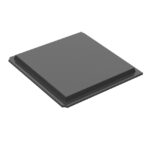 XRT86VL32IB
The activity of extra discounts on wholesale prices is in full swing…
Please fill in your contact information and we will send you the latest wholesale price list.






