 ChipApex | Global Electronic Components Supplier
SEARCH
Search Product
Search Post
— IC芯片 | 连接器 | 传感器 | 被动器件 —
Search productSearch post
— IC芯片 | 连接器 | 传感器 | 被动器件 —
Consult the customer manager about the wholesale price.
consultation hotline:86-132-6715-2157
email:[email protected]
Contact the product manager for consultation. One-stop consultation is available.
Do you want a lower wholesale price? Please send us your inquiry and we will reply immediately.
The Z0107MARL1G is a silicon bidirectional thyristor (Triac) from the Z0107MA series, manufactured by onsemi. It features a sensitive gate design capable of triggering in all four quadrants, making it suitable for direct interface with microprocessor drivers and TTL logic circuits. The device is housed in an injection-molded TO-92 (TO-226AA) package, which facilitates automatic insertion equipment usage. Key electrical ratings include a peak repetitive off-state voltage (VDRM/VRRM) of 600 V, an on-state RMS current (IT(RMS)) of 1.0 A at a case temperature of 50°C, and a peak non-repetitive surge current (ITSM) of 8.0 A. The device operates within a junction temperature range of -40°C to +125°C.
Verify the specific ordering suffix 'RL1G' corresponds to the Radial Tape and Reel packaging option containing 2000 units per reel. Confirm that the component meets Pb-Free requirements as indicated by the datasheet marking diagram. Ensure the selected variant matches the required tape orientation and adhesive tape visibility specifications for automated assembly lines.
Select this component when a 600 V blocking voltage and 1 A RMS current rating are sufficient for the load. The sensitive gate characteristic allows for lower drive currents compared to standard gate Triacs, simplifying driver circuit design. Consider the thermal resistance values and derating curves if operating at high ambient temperatures or with high conduction angles.
This part belongs to the Z0107MA series of sensitive gate Triacs. The 'Z0107' designation indicates the base device family, while the 'MA' suffix typically denotes the specific voltage and current ratings within the series. The 'RL1G' suffix specifies the radial tape and reel packaging format. Other variants in the series may offer different voltage ratings such as 400 V or 800 V.
Direct replacements must match the 600 V rating, 1 A RMS current, and TO-92 package. Verify that substitute components also feature sensitive gate triggering in all four quadrants to ensure compatibility with existing driver circuits. Check thermal characteristics and holding current specifications to confirm functional equivalence.
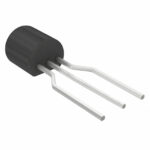 Z0107MARL1G
The activity of extra discounts on wholesale prices is in full swing…
Please fill in your contact information and we will send you the latest wholesale price list.





