 ChipApex | Global Electronic Components Supplier
SEARCH
Search Product
Search Post
— IC芯片 | 连接器 | 传感器 | 被动器件 —
Search productSearch post
— IC芯片 | 连接器 | 传感器 | 被动器件 —
Consult the customer manager about the wholesale price.
consultation hotline:86-132-6715-2157
email:[email protected]
Contact the product manager for consultation. One-stop consultation is available.
Do you want a lower wholesale price? Please send us your inquiry and we will reply immediately.
The Z02215 is a synchronous single-chip V.22bis modem designed for embedded applications requiring space efficiency and low power consumption. It supports 2400 bps full-duplex data transmission over dial-up lines on the Public Switched Telephone Network (PSTN). The device integrates a modem controller, DSP, and Analog Front End (AFE) with active hybrid circuitry. It operates on a single +5 VDC supply and features dynamic power management with SLEEP modes. Available in 44-pin PLCC and LQFP packages, it meets ITU standards including V.22bis, V.22, V.23, V.21, Bell 212A, Bell 202, Bell 202T, and Bell 103.
Verify the specific package variant required, as the Z02215 is available in both 44-lead PLCC and 44-lead LQFP footprints. Confirm that the ordering suffix corresponds to the desired temperature range and packaging configuration. Ensure compatibility with the host interface mode, which can be configured for either serial or parallel operation via the S/P pin. Cross-reference the part number against the manufacturer's current datasheet to confirm availability and any potential revisions to the specification document.
Select the Z02215 when a self-contained solution for V.22bis and legacy Bell standard modulation is required without external memory. Choose this component for designs needing integrated adaptive equalization and programmable transmit attenuation. Consider the device if the application demands minimal external logic and built-in filtering for transmitter and receiver paths. Evaluate the power consumption requirements, as the device offers dynamic power management through SLEEP modes during periods of no traffic.
The Z02215 belongs to the Z02215 series of single-chip modems manufactured by ZiLOG. It is specifically engineered for synchronous data transmission at rates up to 2400 bps. The device consolidates functions typically distributed across multiple chips, including the modem controller, digital signal processing, and analog front-end components. This integration allows for simplified board layouts and reduced system-level costs in telecommunications equipment.
Public confirmed substitute part numbers are not available in the provided documentation. Verify functional equivalence regarding supported modulation standards (V.22bis, Bell 212A, etc.) and interface compatibility if considering alternative vendors. Check package dimensions and pinout configurations to ensure mechanical fit within the existing design constraints.
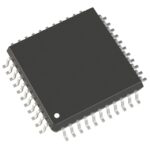 Z0221524ASGR4508
The activity of extra discounts on wholesale prices is in full swing…
Please fill in your contact information and we will send you the latest wholesale price list.





