 ChipApex | Global Electronic Components Supplier
SEARCH
Search Product
Search Post
— IC芯片 | 连接器 | 传感器 | 被动器件 —
Search productSearch post
— IC芯片 | 连接器 | 传感器 | 被动器件 —
Consult the customer manager about the wholesale price.
consultation hotline:86-132-6715-2157
email:[email protected]
Contact the product manager for consultation. One-stop consultation is available.
Do you want a lower wholesale price? Please send us your inquiry and we will reply immediately.
The ZDT705TC is a dual PNP medium power Darlington transistor array manufactured by Diodes Incorporated. It features two independent NPN/PNP Darlington pairs housed in an SM-8 (SOT-223) surface-mount package. The device supports a continuous collector current of -1A and withstands a collector-emitter voltage of -120V. Key electrical parameters include a transition frequency of 160MHz, a maximum total power dissipation of 2.75W when both dies are active, and a static forward current transfer ratio (hFE) ranging from 2K to 30K depending on the collector current. The unit operates within a temperature range of -55°C to +150°C.
Verify component authenticity through authorized distribution channels. Confirm that the received units match the specified SM-8 package marking and date codes. Ensure storage conditions adhere to moisture sensitivity level requirements prior to soldering. Review the latest datasheet revision for any updates to absolute maximum ratings or thermal derating curves before finalizing procurement orders.
Select this component when a dual PNP Darlington configuration is required for medium-power switching tasks. Consider the -120V collector-emitter voltage rating and -1A continuous current limit against load requirements. Evaluate the SM-8 package dimensions for PCB space constraints. Compare thermal resistance values against available copper area on the target board to ensure adequate heat dissipation during operation.
The ZDT705 belongs to the ZDT series of dual Darlington arrays produced by Diodes Incorporated. This series typically offers integrated solutions for driving higher current loads directly from low-current logic signals. The SM-8 packaging provides a balance between power handling capacity and surface-mount footprint efficiency compared to larger through-hole alternatives.
Direct pin-compatible replacements should be sought among other dual PNP Darlington arrays rated for similar voltage and current specifications. Verify that alternative components maintain compatible hFE ranges and saturation voltages to ensure circuit performance parity. Check for equivalent thermal resistance values to prevent overheating issues in existing designs.
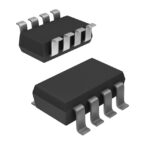 ZDT705TC
The activity of extra discounts on wholesale prices is in full swing…
Please fill in your contact information and we will send you the latest wholesale price list.





