 ChipApex | Global Electronic Components Supplier
SEARCH
Search Product
Search Post
— IC芯片 | 连接器 | 传感器 | 被动器件 —
Search productSearch post
— IC芯片 | 连接器 | 传感器 | 被动器件 —
Consult the customer manager about the wholesale price.
consultation hotline:86-132-6715-2157
email:[email protected]
Contact the product manager for consultation. One-stop consultation is available.
Do you want a lower wholesale price? Please send us your inquiry and we will reply immediately.
The ZDT795ATA is a dual PNP bipolar junction transistor manufactured by Diodes Incorporated. It utilizes silicon technology and is housed in an SM-8 surface-mount package. The device supports a maximum DC collector current of 500 mA and withstands a collector-emitter voltage (VCEO) of 140 V, with a corresponding collector-base voltage (VCBO) of 140 V. The emitter-base voltage (VEBO) rating is 5 V. Key electrical characteristics include a collector-emitter saturation voltage of 250 mV and a power dissipation capacity of 2.75 W. The transition frequency (fT) is specified at 100 MHz. The component operates within a temperature range from -55°C to +150°C.
Verify the specific ordering suffix to ensure compatibility with required packaging formats such as reel or cut tape. Confirm RoHS compliance status through official documentation prior to integration. Check manufacturer lifecycle notices, as this component may be subject to end-of-life transitions. Validate pinout assignments against the latest datasheet to prevent mounting errors during assembly processes.
Select the ZDT795ATA when a dual PNP configuration is required in an SM-8 footprint. Ensure the application demands a 140 V collector-emitter voltage rating and 500 mA continuous current capacity. Verify that the 2.75 W power dissipation limit aligns with thermal management capabilities. Consider the 100 MHz transition frequency for high-speed switching requirements compared to lower-frequency alternatives.
This component belongs to the ZDT795 series of dual PNP transistors produced by Diodes Incorporated. It shares similar electrical specifications with other members of the family but differs in package type and specific voltage or current ratings found in variants like the FZT795ATA. The SM-8 package distinguishes it from single-transistor SOT-223 options.
Publicly confirmed substitute part numbers are not available in the provided source material. Evaluate alternative dual PNP transistors with matching SM-8 packaging, 140 V VCEO, and comparable saturation voltages if direct replacement is necessary.
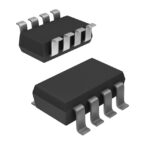 ZDT795ATA
The activity of extra discounts on wholesale prices is in full swing…
Please fill in your contact information and we will send you the latest wholesale price list.





