 ChipApex | Global Electronic Components Supplier
SEARCH
Search Product
Search Post
— IC芯片 | 连接器 | 传感器 | 被动器件 —
Search productSearch post
— IC芯片 | 连接器 | 传感器 | 被动器件 —
Consult the customer manager about the wholesale price.
consultation hotline:86-132-6715-2157
email:[email protected]
Contact the product manager for consultation. One-stop consultation is available.
Do you want a lower wholesale price? Please send us your inquiry and we will reply immediately.
The ZHT431C01STZ is a three-terminal adjustable precision shunt regulator manufactured by Diodes Incorporated. It provides excellent temperature stability and an output current handling capability up to 100mA. The device operates within an extended temperature range of -55°C to +125°C. Its programmable output voltage can be set to any value between 2.5V and 20V using two external divider resistors. This component serves as a high-performance replacement for standard zener diodes in applications requiring improved regulation accuracy.
Verify the specific ordering suffix to confirm package type, tolerance, and availability status. The ZHT431C01STZ variant utilizes a TO-92 package with 1% initial tolerance. Confirm that the procurement channel is authorized to ensure product authenticity and compliance with RoHS standards. Check datasheet revision history for potential updates to electrical characteristics or pinout configurations before finalizing supply agreements.
Select this component when precise voltage reference stability across wide temperature extremes is required. The TO-92 through-hole package facilitates easy integration into legacy designs replacing discrete zener diodes. Ensure the application circuit accommodates the minimum cathode current requirements for proper regulation. Consider the 1% tolerance specification if tighter voltage accuracy than standard zeners is necessary for the design.
The ZHT431 series represents an evolution of the classic TL431 architecture, optimized for higher reliability and broader industrial temperature ranges. Manufactured by Diodes Incorporated, these devices are part of a family of adjustable shunt regulators designed for cost-effective precision referencing. The ZHT431C01STZ specifically targets applications demanding robust performance in harsh thermal environments while maintaining compact form factors.
This component is explicitly documented as a direct replacement for standard zener diodes in applications requiring improved performance characteristics. Designers should verify that the existing circuit topology supports the programmable nature of the shunt regulator rather than relying on fixed breakdown voltages typical of passive zener components.
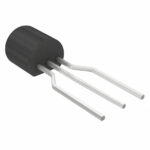 ZHT431C01STZ
The activity of extra discounts on wholesale prices is in full swing…
Please fill in your contact information and we will send you the latest wholesale price list.





