 ChipApex | Global Electronic Components Supplier
SEARCH
Search Product
Search Post
— IC芯片 | 连接器 | 传感器 | 被动器件 —
Search productSearch post
— IC芯片 | 连接器 | 传感器 | 被动器件 —
Consult the customer manager about the wholesale price.
consultation hotline:86-132-6715-2157
email:[email protected]
Contact the product manager for consultation. One-stop consultation is available.
Do you want a lower wholesale price? Please send us your inquiry and we will reply immediately.
The ZL30671 is a single-channel system synchronizer featuring one Digital Phase-Locked Loop (DPLL) and five output frequency families. It accepts up to ten differential or CMOS inputs ranging from 0.5Hz to 900MHz and generates outputs from <0.5Hz to 1045MHz. The device supports ITU-T G.8262, G.813, and G.8273.2 timing compliance with programmable bandwidths from 0.1mHz to 470Hz. Key electrical parameters include input jitter measurement resolution of 1ps, output jitter typically less than 1ps RMS for fractional dividers, and power consumption of 1.3W under standard operating conditions.
Verify the specific ordering suffix LFG7 corresponds to the 80-lead LGA package variant. Confirm that internal Flash memory configuration scripts are required for automatic self-configuration at power-up. Ensure compatibility with SPI or I2C processor interfaces for system integration.
Select this model when only one DPLL channel is required for reference selection and synthesis. Compare against ZL30672 and ZL30673 if additional DPLL channels are needed for complex multi-reference architectures. Verify that the 80-lead LGA package dimensions fit the target PCB layout constraints.
This component belongs to the ZL3067x family of system synchronizers, which includes the ZL30672 (2-channel) and ZL30673 (3-channel). All variants share identical input/output structures and synthesizer architectures but differ in the number of integrated DPLL channels available for reference management.
Direct functional replacements within the same product line include the ZL30672LFG7 and ZL30673LFG7, which offer increased DPLL channel counts while maintaining the same package and interface specifications.
CMOS inputs support frequencies up to 180MHz, while differential inputs can handle frequencies up to 900MHz.
No, the device features an easy-to-configure design that requires no external VCXO or loop filter components.
It provides truly hitless reference switching with support for both revertive and nonrevertive switching algorithms.
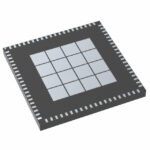 ZL30671LFG7
The activity of extra discounts on wholesale prices is in full swing…
Please fill in your contact information and we will send you the latest wholesale price list.






