 ChipApex | Global Electronic Components Supplier
SEARCH
Search Product
Search Post
— IC芯片 | 连接器 | 传感器 | 被动器件 —
Search productSearch post
— IC芯片 | 连接器 | 传感器 | 被动器件 —
Consult the customer manager about the wholesale price.
consultation hotline:86-132-6715-2157
email:[email protected]
Contact the product manager for consultation. One-stop consultation is available.
Do you want a lower wholesale price? Please send us your inquiry and we will reply immediately.
The ZSC31050FAG1-R is a CMOS integrated circuit designed for the amplification and sensor-specific correction of bridge sensor signals. It features digital compensation for offset, sensitivity, temperature drift, and non-linearity via an internal 16-bit RISC microcontroller. The device accommodates resistive bridge sensors with input signals ranging from 1mV/V to 275mV/V. It supports multiple output options including voltage (0V to 5V), current (4mA to 20mA), PWM, I2C, SPI, and ZACwire™. Operating on a supply voltage of +2.7V to +5.5V, it is housed in a 16-SSOP package and qualified to AEC-Q100 standards.
Verify the specific suffix 'FA' against official Renesas documentation to confirm pinout and functional variations compared to standard variants. Confirm availability status as some ZSC31050 series components may be discontinued or subject to PCN changes. Ensure the selected package matches the target PCB footprint requirements.
Select this component when digital calibration of bridge sensors is required to reduce external analog complexity. Consider the available interface options (I2C, SPI, ZACwire) for system integration needs. Evaluate the operating temperature range and supply voltage constraints against the application environment before finalizing the design.
The ZSC31050FAG1-R belongs to the ZSC31050 family of advanced differential sensor signal conditioners. This series is designed to simplify the interface between resistive bridge sensors and microcontrollers by handling signal conditioning and linearization internally. Other variants in the family include ZSC31050DEG1-R and ZSC31050FIG1-R.
Check for direct substitutes within the ZSC31050 family such as ZSC31050FIG1-R or ZSC31050FEG1-R. Verify compatibility with existing calibration coefficients and software tools if replacing an older variant.
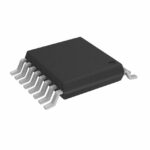 ZSC31050FAG1-R
The activity of extra discounts on wholesale prices is in full swing…
Please fill in your contact information and we will send you the latest wholesale price list.





