 ChipApex | Global Electronic Components Supplier
SEARCH
Search Product
Search Post
— IC芯片 | 连接器 | 传感器 | 被动器件 —
Search productSearch post
— IC芯片 | 连接器 | 传感器 | 被动器件 —
Consult the customer manager about the wholesale price.
consultation hotline:86-132-6715-2157
email:[email protected]
Contact the product manager for consultation. One-stop consultation is available.
Do you want a lower wholesale price? Please send us your inquiry and we will reply immediately.
The ZSSC4151AE2R is a CMOS sensor signal conditioner designed for automotive resistive bridge sensors. It features an internal 16-bit RISC microcontroller that performs digital compensation for offset, sensitivity, temperature drift, and nonlinearity, with coefficients stored in integrated EEPROM. The device supports a supply voltage range of 4.5 V to 5.5 V and operates within a temperature range of -40°C to +150°C. It offers an analog gain of up to 200 times and provides outputs via a ratiometric 12-bit analog voltage or digital interfaces including I2C and ZACwire™ (OWI). The component is AEC-Q100 qualified and housed in a VFQFN-24 package.
Verify the specific suffix AE2R against the manufacturer's current datasheet to confirm package type and tape-and-reel specifications. Ensure the procurement source provides valid RoHS compliance documentation and confirms AEC-Q100 qualification status as required for automotive applications. Cross-reference the part number with official Renesas Electronics catalogs to avoid counterfeit components.
Select this component when designing systems that require digital calibration of resistive bridge sensors without external trimming equipment. It is suitable for applications demanding high operating temperatures up to 150°C and robust noise immunity through digital communication interfaces. Consider the available analog gain and output formats when matching sensor characteristics to system requirements.
The ZSSC4151AE2R belongs to the ZSSC4151 family of sensor signal conditioners from Renesas Electronics. This series is engineered to simplify the integration of resistive bridge sensors by providing on-chip amplification and digital correction. The family supports various packaging options to accommodate different board space constraints while maintaining automotive-grade reliability standards.
Consult the official Renesas Electronics replacement guide for verified substitute part numbers. Do not assume functional equivalence with other sensor interface ICs without verifying pin compatibility, electrical parameters, and software configuration requirements.
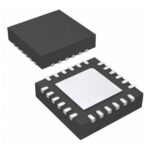 ZSSC4151AE2R
The activity of extra discounts on wholesale prices is in full swing…
Please fill in your contact information and we will send you the latest wholesale price list.





