 ChipApex | Global Electronic Components Supplier
SEARCH
Search Product
Search Post
— IC芯片 | 连接器 | 传感器 | 被动器件 —
Search productSearch post
— IC芯片 | 连接器 | 传感器 | 被动器件 —
Consult the customer manager about the wholesale price.
consultation hotline:86-132-6715-2157
email:[email protected]
Contact the product manager for consultation. One-stop consultation is available.
Do you want a lower wholesale price? Please send us your inquiry and we will reply immediately.
The Mini-Circuits ZX60-04183LN+ is an ultra-wideband coaxial low noise amplifier designed for operation from 4 to 18 GHz. It provides a unique combination of low noise figure, high IP3, and low current consumption. The device features SMA connectors and operates on a single positive supply voltage. Key electrical parameters include a gain of 25 dB, a noise figure of 2.5 dB, and a third-order intercept point (OIP3) of 26 dBm. The P1dB compression point is rated at 17 dBm. It functions within a temperature range of -40°C to +85°C.
Verify the specific datasheet revision when ordering, as Mini-Circuits may update pinout or mechanical dimensions across production batches. Confirm that the SMA connector gender matches your system requirements. Ensure the power supply voltage aligns with the specified operating range to maintain stability. Check for any recent obsolescence notices or lifecycle status updates directly from the manufacturer before finalizing procurement plans.
Select this component when wide bandwidth is critical alongside low noise performance in the microwave spectrum. It is suitable for designs requiring high linearity to minimize intermodulation distortion in multi-carrier environments. Consider the thermal management capabilities given the operating temperature range. Evaluate if the coaxial form factor fits the available PCB space compared to surface-mount alternatives in the same series.
This part belongs to the ZX60 series of low noise amplifiers from Mini-Circuits. The series typically includes various models covering different frequency bands and gain levels. The ZX60-04183LN+ specifically targets the higher frequency end of the microwave range, distinguishing it from lower-frequency variants like the ZX60-43LPN+. It represents a standard solution for broadband RF front-end modules.
Direct substitutes within the same family include the ZX60-06183LN+, which offers a slightly shifted frequency range starting at 6 GHz. Designers should verify that the input/output impedance and connector types remain compatible when swapping between these closely related models.
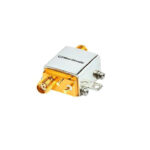 ZX60-04183LN+
The activity of extra discounts on wholesale prices is in full swing…
Please fill in your contact information and we will send you the latest wholesale price list.





