 ChipApex | Global Electronic Components Supplier
SEARCH
Search Product
Search Post
— IC芯片 | 连接器 | 传感器 | 被动器件 —
Search productSearch post
— IC芯片 | 连接器 | 传感器 | 被动器件 —
The trend of science and technology is changing rapidly.
The multilayer ceramic capacitor (MLCC) market has fallen into a severe structural supply crunch in the third quarter of 2026, driven by explosive demand from AI high-performance servers and new energy vehicle electronics. Leading global manufacturers including Murata, Samsung Electro-Mechanics, Taiyo Yuden and YAGEO have fully locked their high-grade production capacity under long-term framework agreements, triggering widespread panic stocking among EMS factories, system integrators and component distributors worldwide.
For AEC-Q200 automotive-grade, high-capacitance, high-temperature and high-voltage MLCCs dedicated to AI server power supply modules, official factory order lead times have been drastically stretched. The average production cycle ranges from 12 months to 16 months for the tightest constrained specifications, far exceeding the shortage cycle back in 2018.
The core bottleneck lies in slow capacity expansion: key precision casting equipment for high-end MLCC production is imported exclusively from Japan, with equipment delivery alone taking over 12 months. A complete new production line needs 18 to 24 months for full yield ramp-up, leaving zero short-term room to ease supply pressure. Major OEMs have already signed 3–5 year long-term contracts to reserve limited capacity, squeezing allocation for small and medium-sized bulk buyers.
Price divergence becomes extremely obvious across different MLCC grades:

Analog Devices completes acquisition of Empower Semiconductor to expand high-density power management IC portfolio, serving AI server, automotive and industrial semiconductor markets.
View details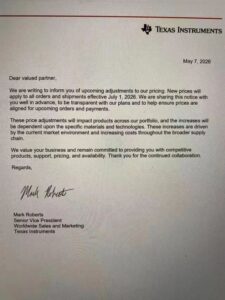
Texas Instruments officially announced a new price increase for analog, power IC and automotive semiconductor products, taking effect on July 1, 2026. ChipApex provides genuine TI electronic components with stable supply and competitive price.
View details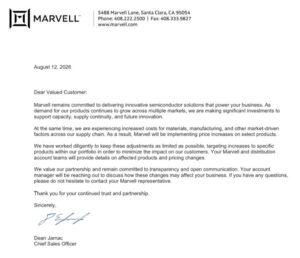
Latest 2026 news of Marvell price adjustment. Marvell announces selective price hikes for networking, storage and server chips due to rising supply chain costs and booming AI market demand. Check updated component price trends & supply status.
View details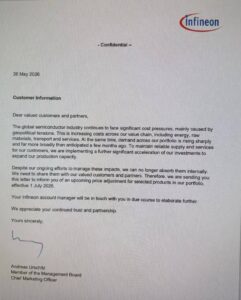
Infineon raises prices for MOSFET, IGBT, PMIC and automotive devices effective July 1, 2026. Latest semiconductor news from ChipApex.
View details
The activity of extra discounts on wholesale prices is in full swing…
Please fill in your contact information and we will send you the latest wholesale price list.