 ChipApex | Global Electronic Components Supplier
SEARCH
Search Product
Search Post
— IC芯片 | 连接器 | 传感器 | 被动器件 —
Search productSearch post
— IC芯片 | 连接器 | 传感器 | 被动器件 —
Consult the customer manager about the wholesale price.
consultation hotline:86-132-6715-2157
email:[email protected]
Contact the product manager for consultation. One-stop consultation is available.
Do you want a lower wholesale price? Please send us your inquiry and we will reply immediately.
The Vishay 16CTQ100-1 is a dual Schottky rectifier in the TO-262 (D2Pak) package, featuring a common cathode configuration. It provides a maximum average forward current of 16 A per device and supports a repetitive peak reverse voltage up to 100 V. The component operates reliably at junction temperatures ranging from -55 °C to +175 °C. Key electrical characteristics include a maximum forward voltage drop of 0.88 V at 16 A and 125 °C, with a non-repetitive surge current capability of 850 A.
Verify the specific ordering suffix to confirm the package type and tape/reel orientation if applicable. Confirm RoHS compliance status as standard production may vary by revision. Check for lead-free designation requirements against project specifications. Ensure thermal management design accounts for the specified junction-to-case thermal resistance values under actual operating conditions.
Select this component when a dual Schottky rectifier with center tap topology is required for high-frequency operation. Consider the 175 °C junction temperature rating for high-thermal environments. Evaluate the forward voltage drop trade-off against reverse leakage current requirements. Verify that the TO-262 package dimensions fit the available PCB space and mounting constraints.
This part belongs to the Vishay 16CTQ...-1 series, which utilizes the TO-262 case style. It shares architectural similarities with the 16CTQ...S series but differs in physical packaging. The series is engineered for high-power applications requiring robust performance and low switching losses typical of Schottky technology.
Direct pin-compatible substitutes within the same Vishay family include the 16CTQ060-1 and 16CTQ080-1 for lower voltage ratings. Cross-manufacturer replacements must match the 16 A current rating, 100 V blocking voltage, and TO-262 package outline to ensure mechanical interchangeability.
The maximum thermal resistance from junction to case is 3.25 °C/W per leg.
Yes, the device is designed and qualified for Q101 level automotive standards.
The typical series inductance per leg is 8.0 nH, measured lead to lead 5 mm from the package body.
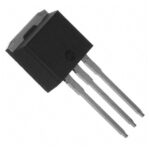 16CTQ100-1
The activity of extra discounts on wholesale prices is in full swing…
Please fill in your contact information and we will send you the latest wholesale price list.




