 ChipApex | Global Electronic Components Supplier
SEARCH
Search Product
Search Post
— IC芯片 | 连接器 | 传感器 | 被动器件 —
Search productSearch post
— IC芯片 | 连接器 | 传感器 | 被动器件 —
Consult the customer manager about the wholesale price.
consultation hotline:86-132-6715-2157
email:[email protected]
Contact the product manager for consultation. One-stop consultation is available.
Do you want a lower wholesale price? Please send us your inquiry and we will reply immediately.
The 2N3955A is a small signal N-channel Junction Field-Effect Transistor (JFET) manufactured by Harris Corporation. It is designed for low-power applications with a maximum power dissipation of 0.25 W and an operating temperature range up to 200 °C. The device utilizes a through-hole package configuration with Tin/Lead (Sn/Pb) terminal plating. It does not comply with RoHS standards. The component functions as a single-element semiconductor switch or amplifier, characterized by its junction FET technology and specific thermal limits.
Verify the presence of Tin/Lead (Sn/Pb) plating on terminals, as this component is explicitly noted as non-compliant with RoHS regulations. Confirm the manufacturer origin, as historical data links this part number to Harris Corporation. Ensure that the procurement source provides documentation confirming the through-hole package style and the specific 0.25 W power dissipation rating to avoid substitution errors with modern lead-free alternatives.
Select this component when a legacy N-channel JFET with high thermal tolerance is required. The 200 °C maximum operating temperature distinguishes it from standard silicon devices limited to 150 °C. Consider the non-RoHS status and Pb-containing leads during selection for compliance with environmental regulations in the target assembly. Verify that the circuit design accommodates the specific electrical characteristics of a small signal JFET rather than a MOSFET.
This component belongs to the discrete semiconductor category, specifically within the transistor family. It represents a legacy product line associated with Harris Corporation, which has undergone corporate restructuring and acquisitions over time. The 2N3955A is distinct from modern integrated circuits, serving as a fundamental discrete active device for analog signal processing.
Publicly confirmed substitute part numbers are not available in the provided reference material. Due to the specific thermal ratings and legacy manufacturing status, direct cross-referencing requires consultation of official manufacturer replacement guides or equivalent vintage datasheets.
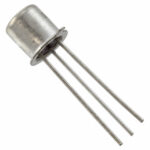 2N3955A
The activity of extra discounts on wholesale prices is in full swing…
Please fill in your contact information and we will send you the latest wholesale price list.






