 ChipApex | Global Electronic Components Supplier

SEARCH
Search Product
Search Post
— IC芯片 | 连接器 | 传感器 | 被动器件 —
Search productSearch post
— IC芯片 | 连接器 | 传感器 | 被动器件 —
Consult the customer manager about the wholesale price.
consultation hotline:86-132-6715-2157
email:[email protected]
Contact the product manager for consultation. One-stop consultation is available.
Do you want a lower wholesale price? Please send us your inquiry and we will reply immediately.
The Central Semiconductor Corp 2N5367 APM TIN/LEAD is a silicon NPN bipolar junction transistor (BJT) designed for general-purpose switching and amplification applications. It features a single configuration housed in a TO-92-3 through-hole package with tin/lead termination. The device supports a collector-emitter voltage of 40V, a collector-base voltage of 50V, and an emitter-base voltage of 5V. It handles a continuous collector current of 600mA with a power dissipation rating of 625mW. The component operates within a temperature range of -65°C to +150°C and provides a minimum DC current gain of 80 at specified test conditions.
Verify the specific suffix 'APM' against official datasheets to confirm lead composition and marking details. Ensure the ordering quantity aligns with manufacturer packaging constraints. Confirm RoHS compliance status if required by project specifications. Validate that the tin/lead finish meets solderability requirements for the intended assembly process.
Select this component when a standard NPN BJT with moderate voltage ratings and 600mA current capability is required. The TO-92-3 package is suitable for prototyping and low-volume production. Consider the 625mW power dissipation limit when designing heat management strategies. Compare current gain specifications against circuit requirements to ensure adequate drive capability.
This part belongs to the broader category of discrete bipolar transistors manufactured by Central Semiconductor. It serves as a fundamental active component in analog and digital electronics. The TO-92-3 form factor is widely used in consumer electronics and industrial control systems. It complements other NPN and PNP variants in the manufacturer's portfolio for complementary circuit designs.
Consult official substitution guides for equivalent NPN transistors with matching VCEO, IC, and package dimensions. Verify pinout compatibility before replacing to prevent circuit damage. Check if alternative parts offer improved thermal performance or higher current ratings if system margins are tight.
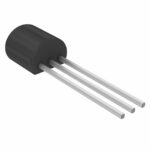 2N5367 APM TIN/LEAD

The activity of extra discounts on wholesale prices is in full swing…
Please fill in your contact information and we will send you the latest wholesale price list.





