 ChipApex | Global Electronic Components Supplier

SEARCH
Search Product
Search Post
— IC芯片 | 连接器 | 传感器 | 被动器件 —
Search productSearch post
— IC芯片 | 连接器 | 传感器 | 被动器件 —
Consult the customer manager about the wholesale price.
consultation hotline:86-132-6715-2157
email:[email protected]
Contact the product manager for consultation. One-stop consultation is available.
Do you want a lower wholesale price? Please send us your inquiry and we will reply immediately.
The Central Semiconductor Corp 2N5401 TRA TIN/LEAD is a PNP silicon small-signal bipolar junction transistor housed in a TO-92-3 through-hole package. It supports a maximum collector current of 600 mA and a collector-emitter voltage of 150 V, with a collector-base voltage rating of 160 V. The device features a power dissipation capacity of 625 mW and a transition frequency of 300 MHz. Operating temperatures range from -65°C to +150°C, ensuring reliability across diverse environmental conditions.
Verify the specific suffix designation against official manufacturer documentation to confirm lead material composition and hermetic sealing requirements. Ensure the selected variant matches the intended operating temperature range and radiation hardness specifications for your application. Cross-reference datasheet revisions to confirm compliance with current industry standards before finalizing procurement decisions.
Select this component when high-voltage handling and reliable switching are required in a compact through-hole form factor. Consider the 300 MHz transition frequency for moderate-speed signal processing tasks. Evaluate the thermal dissipation limits relative to your circuit's power requirements to ensure stable operation within the specified temperature boundaries without exceeding safe operating area constraints.
This part belongs to the established 2N5401 family of PNP transistors, widely recognized for general-purpose use. Central Semiconductor offers variations including tin/lead terminations and potential hermetic packaging options. The component serves as a standard replacement for legacy designs requiring robust bipolar transistor performance in space-constrained or high-reliability environments.
Direct substitutes include other manufacturers' 2N5401 variants meeting identical electrical specifications. Verify pinout compatibility and package dimensions when replacing existing components. Ensure thermal characteristics align with the original design requirements to maintain system stability.
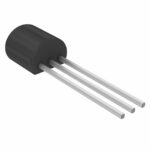 2N5401 TRA TIN/LEAD

The activity of extra discounts on wholesale prices is in full swing…
Please fill in your contact information and we will send you the latest wholesale price list.





