 ChipApex | Global Electronic Components Supplier

SEARCH
Search Product
Search Post
— IC芯片 | 连接器 | 传感器 | 被动器件 —
Search productSearch post
— IC芯片 | 连接器 | 传感器 | 被动器件 —
Consult the customer manager about the wholesale price.
consultation hotline:86-132-6715-2157
email:[email protected]
Contact the product manager for consultation. One-stop consultation is available.
Do you want a lower wholesale price? Please send us your inquiry and we will reply immediately.
The Microchip Technology 2N5416 is a silicon PNP power bipolar junction transistor (BJT) designed for high-voltage applications. It features a collector-emitter breakdown voltage of 300 V and a collector-base voltage rating of 350 V, with an emitter-base voltage limit of 6 V. The device supports a maximum continuous DC collector current of 1 A and dissipates up to 1 W of power. It operates within a temperature range of -65 °C to +200 °C. The component utilizes a TO-5-3 through-hole package and provides a DC current gain (hFE) ranging from 15 to 120.
Verify the specific manufacturing lot and date code upon receipt to ensure compliance with project requirements. Confirm that the TO-5-3 hermetic seal integrity meets environmental standards. Cross-reference the datasheet revision against the provided documentation to validate electrical parameters. Ensure proper handling procedures are followed due to the sensitive nature of the semiconductor junctions during installation.
Select this component when a high-voltage PNP transistor is required in a through-hole configuration. The 300 V rating distinguishes it from lower-voltage alternatives like the 2N5415U4. Consider the TO-5-3 package constraints regarding board space and mounting hardware. Evaluate the thermal management needs given the 1 W power dissipation limit and the specific hFE characteristics at intended operating currents.
This part belongs to the legacy 2N541x series of high-voltage PNP transistors manufactured by Microchip Technology. It serves as the through-hole equivalent to surface-mount variants such as the 2N5416U4. The series is characterized by its ability to operate at elevated temperatures and handle significant voltage stresses, making it suitable for rugged electronic environments where reliability is critical.
The 2N5416U4 is a surface-mount alternative within the same family but differs in package type. Direct pin-for-pin replacement is not possible due to the distinct TO-5-3 through-hole versus SMD form factors. Verify circuit layout compatibility before considering any substitution.
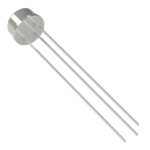 2N5416

The activity of extra discounts on wholesale prices is in full swing…
Please fill in your contact information and we will send you the latest wholesale price list.





