 ChipApex | Global Electronic Components Supplier

SEARCH
Search Product
Search Post
— IC芯片 | 连接器 | 传感器 | 被动器件 —
Search productSearch post
— IC芯片 | 连接器 | 传感器 | 被动器件 —
Consult the customer manager about the wholesale price.
consultation hotline:86-132-6715-2157
email:[email protected]
Contact the product manager for consultation. One-stop consultation is available.
Do you want a lower wholesale price? Please send us your inquiry and we will reply immediately.
The onsemi 2N5962 is an NPN general-purpose amplifier transistor designed for low-noise, high-gain applications requiring collector currents up to 50 mA. It features a collector-emitter breakdown voltage of 45 V and a continuous collector current rating of 100 mA. The device operates within a junction temperature range of -55°C to +150°C with a total device dissipation of 625 mW. It offers a DC current gain (hFE) ranging from 450 to 1400 at IC = 10 mA and VCE = 5 V. Small-signal characteristics include a noise figure as low as 3.0 dB under specific test conditions.
Verify the manufacturer source carefully, as this component was originally produced by Fairchild Semiconductor and may now be distributed by onsemi or other entities. Confirm the package type (TO-92 or SOT-23) matches your design requirements. Check for obsolescence status and lead times, as availability may vary significantly between distributors. Ensure compliance with any relevant environmental regulations such as RoHS if applicable to your region.
Select this component when low noise and high gain are critical for the application. Consider the thermal resistance and power dissipation limits for proper heat management. Evaluate the required collector current against the 50 mA design target. Compare the hFE range with circuit requirements to ensure adequate amplification. Verify the operating temperature range meets environmental constraints.
The 2N5962 is part of a family of NPN general-purpose transistors known for their high gain and low noise characteristics. It is often compared to similar devices like the 2N5088 due to shared process technology. The component is available in both TO-92 and SOT-23 packages, offering flexibility for different mounting and space requirements. Its historical association with Fairchild Semiconductor adds to its established reputation in analog circuit design.
Consult the datasheet for direct substitutes like the MMBT5962, which shares identical electrical characteristics but may differ in packaging. Verify pinout compatibility before substitution. Other high-gain NPN transistors may require circuit adjustments due to differences in hFE or noise figures.
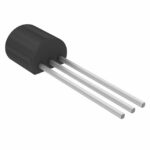 2N5962

The activity of extra discounts on wholesale prices is in full swing…
Please fill in your contact information and we will send you the latest wholesale price list.





