ChipApex | Global Electronic Components Supplier
SEARCH
Search Product
Search Post
— IC芯片 | 连接器 | 传感器 | 被动器件 —
Search productSearch post
— IC芯片 | 连接器 | 传感器 | 被动器件 —
Consult the customer manager about the wholesale price.
consultation hotline:86-132-6715-2157
email:[email protected]
Contact the product manager for consultation. One-stop consultation is available.
Do you want a lower wholesale price? Please send us your inquiry and we will reply immediately.
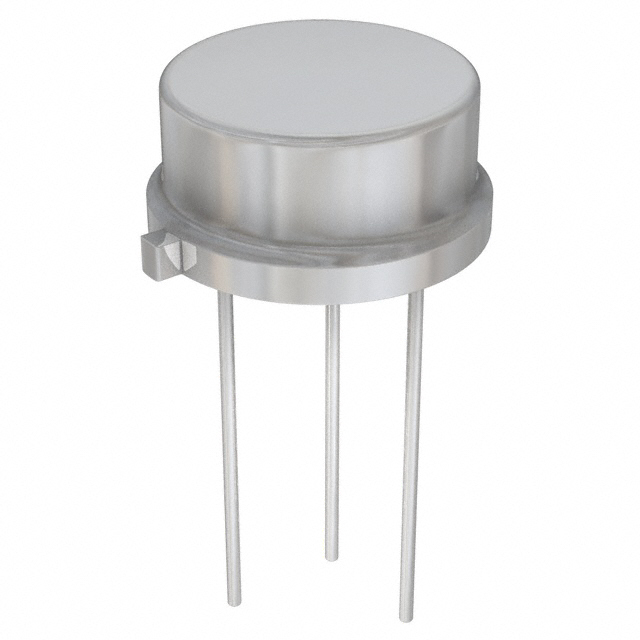
The Vishay Siliconix 2N6661-2 is a military-qualified N-channel enhancement-mode MOSFET housed in a TO-205AD (TO-39) metal can package. It features a drain-source breakdown voltage of 90 V and a continuous drain current of 0.86 A at 25 °C case temperature. The device exhibits a maximum on-state resistance of 4 Ω at VGS = 10 V, with a typical gate threshold voltage of 1.6 V. Key dynamic parameters include an input capacitance of 35 pF and switching times of approximately 6 ns turn-on and 8 ns turn-off.
Verify that the specific ordering suffix matches the required lead finish and manufacturing flow. Confirm compliance with the -2 flow document for this variant. Check RoHS status and ensure the component meets the necessary military specifications for your intended deployment environment before finalizing procurement.
Select this component when military-grade reliability and low offset voltage are required. Ensure the application operates within the 90 V drain-source limit and 0.86 A continuous current rating. Verify that the thermal management strategy accommodates the specified junction-to-case thermal resistance for the expected power dissipation levels.
This part belongs to the Vishay Siliconix family of N-channel 90 V MOSFETs, which includes commercial variants like the 2N6661 and JANTX/JANTXV radiation-hardened versions. All share the same core electrical characteristics but differ in qualification standards, lead finishes, and manufacturing traceability requirements defined by their respective ordering suffixes.
Cross-reference with JAN2N6661 or 2N6661JANTX for equivalent electrical performance. Verify pinout compatibility in the TO-205AD package. Confirm that the substitute part meets the specific military qualification and environmental testing requirements mandated by the original design.
Yes, the datasheet specifies that the drain is electrically connected to the case.
The maximum operating junction temperature is 150 °C.
Yes, the specifications list a forward voltage for the intrinsic diode, confirming its presence.
 2N6661-2
The activity of extra discounts on wholesale prices is in full swing…
Please fill in your contact information and we will send you the latest wholesale price list.