ChipApex | Global Electronic Components Supplier

SEARCH
Search Product
Search Post
— IC芯片 | 连接器 | 传感器 | 被动器件 —
Search productSearch post
— IC芯片 | 连接器 | 传感器 | 被动器件 —
Consult the customer manager about the wholesale price.
consultation hotline:86-132-6715-2157
email:[email protected]
Contact the product manager for consultation. One-stop consultation is available.
Do you want a lower wholesale price? Please send us your inquiry and we will reply immediately.
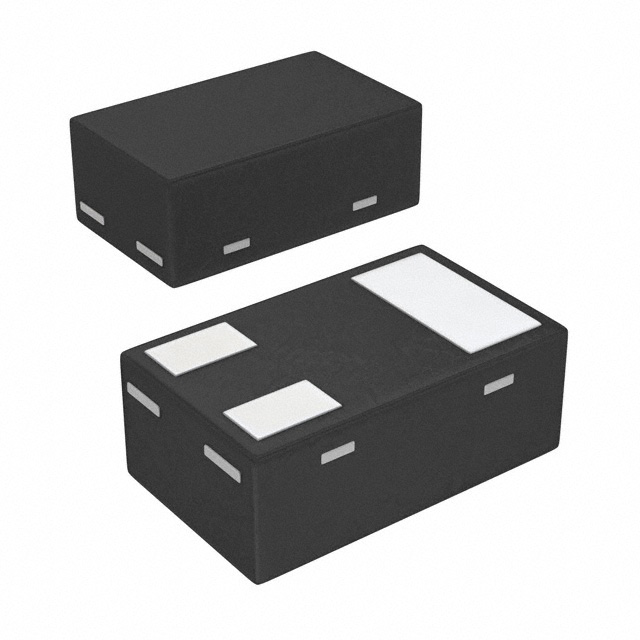
2SA2154CT-Y(TPL3) is listed in the Single Bipolar Transistors range at ChipApex. The manufacturer field lists Toshiba Semiconductor and Storage. Its product description is TRANS PNP 50V 0.1A CST3. Review the specifications below when checking this part for your BOM.
The Toshiba 2SA2154CT-Y(TPL3) is a PNP silicon epitaxial planar transistor designed for low-frequency amplification. It features a maximum collector current of 100 mA and a collector-emitter voltage (Vceo) of 50 V. The device operates with a gain-bandwidth product (Ft) of 80 MHz and a power dissipation rating of 100 mW. Packaged in the CST-3 surface-mount format, it provides a collector-base voltage (Vcbo) of 50 V and an emitter-base voltage (Vebo) of 5 V.
Verify the specific suffix 'Y(TPL3)' against official Toshiba Semiconductor and Storage documentation to confirm tape-and-reel packaging specifications and RoHS compliance status. Ensure the ordering code matches the exact CST-3 variant required for your PCB layout. Cross-reference datasheet revision dates to validate electrical parameter tolerances before finalizing procurement orders.
Select this component when designing circuits requiring a compact PNP transistor with moderate current handling capabilities. The 100 mA limit and 50 V breakdown voltage define its operational boundaries. Consider the 100 mW thermal dissipation constraint for heat management in dense surface-mount layouts. Verify that the 80 MHz transition frequency meets the bandwidth requirements of the intended signal path.
This part belongs to the 2SA2154 series of bipolar junction transistors manufactured by Toshiba Semiconductor and Storage. The series focuses on providing reliable performance for general-purpose amplification and switching roles within modern electronic devices. The CST-3 package allows for automated placement, supporting high-volume manufacturing processes for consumer and industrial equipment.
Consult official Toshiba substitution guides for verified equivalents. Generic replacements may differ in Ft or saturation voltage.
Explore related parts through Bipolar (BJT), Transistors, Discrete Semiconductor Products, all product categories.
 2SA2154CT-Y(TPL3)

The activity of extra discounts on wholesale prices is in full swing…
Please fill in your contact information and we will send you the latest wholesale price list.