ChipApex | Global Electronic Components Supplier

SEARCH
Search Product
Search Post
— IC芯片 | 连接器 | 传感器 | 被动器件 —
Search productSearch post
— IC芯片 | 连接器 | 传感器 | 被动器件 —
Consult the customer manager about the wholesale price.
consultation hotline:86-132-6715-2157
email:[email protected]
Contact the product manager for consultation. One-stop consultation is available.
Do you want a lower wholesale price? Please send us your inquiry and we will reply immediately.
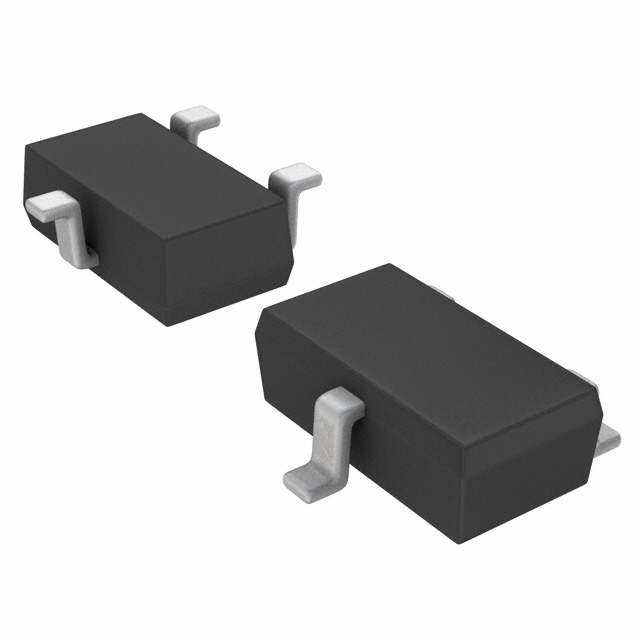
The 2SD2672TL is an NPN silicon bipolar junction transistor manufactured by ROHM Semiconductor, designed for low-frequency amplification and switching applications. It features a collector-emitter voltage (VCEO) of 12 V and a maximum DC collector current of 4 A. The device operates in a surface-mount SOT-346T package with a power dissipation rating of 0.5 W. Key electrical parameters include a collector-base voltage (VCBO) of 12 V, an emitter-base voltage (VEBO) of 5 V, and a collector-emitter saturation voltage of 250 mV at specified currents. The DC current gain (hFE) ranges from 270 to 680 at 200 mA and 2 V. The component supports a maximum operating temperature of +150°C and complies with RoHS standards.
Verify the specific suffix TL against official ROHM documentation to confirm packaging configuration and reel specifications. Ensure compatibility with SOT-346T footprint requirements during PCB layout. Confirm RoHS compliance status through the manufacturer's latest datasheet or environmental declaration. Cross-reference part numbers to distinguish between standard and final sale inventory statuses before procurement.
Select this component when high current handling up to 4 A is required in a compact surface-mount form factor. The low saturation voltage minimizes power loss in switching modes. Verify that the 12 V voltage rating aligns with circuit supply levels. Consider the 0.5 W power dissipation limit for thermal management design. Ensure the hFE range meets the base drive requirements for the intended application load.
The 2SD2672 belongs to ROHM's series of low VCE(sat) transistors optimized for general-purpose use. It serves as a replacement for older discrete solutions requiring higher efficiency in low-voltage environments. The TSMT3 package variant offers a standardized footprint for automated assembly. This component type is commonly integrated into consumer electronics and industrial control boards where space constraints and thermal performance are critical design factors.
Check for direct substitutes within the same ROHM family such as the 2SD2672 without suffix if packaging differs. Verify pinout compatibility with existing board layouts. Compare absolute maximum ratings to ensure no derating issues arise in the target application environment.
 2SD2672TL

The activity of extra discounts on wholesale prices is in full swing…
Please fill in your contact information and we will send you the latest wholesale price list.