 ChipApex | Global Electronic Components Supplier
SEARCH
Search Product
Search Post
— IC芯片 | 连接器 | 传感器 | 被动器件 —
Search productSearch post
— IC芯片 | 连接器 | 传感器 | 被动器件 —
Consult the customer manager about the wholesale price.
consultation hotline:86-132-6715-2157
email:[email protected]
Contact the product manager for consultation. One-stop consultation is available.
Do you want a lower wholesale price? Please send us your inquiry and we will reply immediately.
The Toshiba Semiconductor and Storage 2SK3844(Q) is a silicon N-channel MOS type field effect transistor utilizing U-MOS III technology. Designed for switching regulators, DC-DC converters, and motor drives, it features a low drain-source ON-resistance of 4.1 mΩ (typ.) and high forward transfer admittance of 63 S (typ.). The device supports a maximum drain current of 45 A and withstands a drain-source voltage of 60 V. It operates in enhancement mode with a gate threshold voltage ranging from 2.0 to 4.0 V.
Verify the specific ordering suffix or lot marking on the component body to confirm RoHS compatibility status, as indicated by the presence or absence of an underline beneath the lot number. Ensure that the procurement channel provides official documentation confirming the product's environmental compliance and adherence to the latest Toshiba Semiconductor Reliability Handbook guidelines before integration into designs.
Select this component when designing circuits requiring robust N-channel MOSFET performance with low conduction losses. Consider the thermal resistance characteristics and safe operating area curves to ensure reliable operation under varying load conditions. Verify that the required gate drive voltage aligns with the specified threshold range and that the package type meets the physical constraints of the target application board.
This part belongs to the family of silicon N-channel MOS type field effect transistors manufactured by Toshiba Semiconductor. It is engineered using U-MOS III technology, which focuses on reducing ON-resistance while maintaining high reliability. The device is intended for general electronics applications and specific power management roles, distinct from high-reliability aerospace or medical equipment uses.
Consult official Toshiba documentation for verified substitute part numbers. Cross-referencing requires matching key electrical parameters such as drain-source voltage, continuous drain current, and package dimensions to ensure functional equivalence without compromising circuit safety or performance standards.
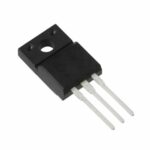 2SK3844(Q)
The activity of extra discounts on wholesale prices is in full swing…
Please fill in your contact information and we will send you the latest wholesale price list.





