 ChipApex | Global Electronic Components Supplier
SEARCH
Search Product
Search Post
— IC芯片 | 连接器 | 传感器 | 被动器件 —
Search productSearch post
— IC芯片 | 连接器 | 传感器 | 被动器件 —
Consult the customer manager about the wholesale price.
consultation hotline:86-132-6715-2157
email:[email protected]
Contact the product manager for consultation. One-stop consultation is available.
Do you want a lower wholesale price? Please send us your inquiry and we will reply immediately.
The onsemi 4N28SM is a surface-mount transistor output optocoupler featuring a single channel. It utilizes an infrared LED coupled to an NPN phototransistor for signal isolation. The device provides a high isolation voltage of 4170 Vrms, ensuring robust protection between input and output circuits. It is housed in a compact 6-pin SMD package designed for automated assembly processes. The component supports DC input signals and offers standard switching characteristics suitable for general-purpose digital isolation applications in industrial and consumer electronics.
Verify the specific datasheet version when sourcing, as pinout configurations and electrical limits can vary between manufacturers offering equivalent part numbers. Confirm that the 6-pin SMD footprint matches the target PCB layout requirements. Ensure compliance with RoHS directives if required by the end product specifications. Cross-reference the manufacturer's official documentation for thermal derating curves and storage conditions prior to integration.
Select this component when a low-cost, single-channel isolation solution is required for space-constrained designs. The surface mount package facilitates high-volume production efficiency compared to through-hole alternatives. Consider the propagation delay and rise/fall times against the system's switching speed requirements. Evaluate the operating temperature range to ensure reliability under expected environmental conditions.
This device belongs to the broader category of transistor output optocouplers, which are fundamental components for galvanic isolation in electronic circuits. It serves as a direct replacement or alternative to other industry-standard DIP-6 optocouplers adapted for surface mount technology. The family typically emphasizes cost-effectiveness and basic isolation performance for non-critical signal paths.
Direct replacements must match the 6-pin SMD footprint and maintain similar isolation voltage ratings. Verify that substitute parts offer comparable current transfer ratios and switching speeds. Check for any differences in lead-free soldering compatibility if rework is anticipated.
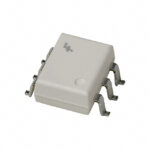 4N28SM
The activity of extra discounts on wholesale prices is in full swing…
Please fill in your contact information and we will send you the latest wholesale price list.





