 ChipApex | Global Electronic Components Supplier
SEARCH
Search Product
Search Post
— IC芯片 | 连接器 | 传感器 | 被动器件 —
Search productSearch post
— IC芯片 | 连接器 | 传感器 | 被动器件 —
Consult the customer manager about the wholesale price.
consultation hotline:86-132-6715-2157
email:[email protected]
Contact the product manager for consultation. One-stop consultation is available.
Do you want a lower wholesale price? Please send us your inquiry and we will reply immediately.
The ADG751ARTZ-REEL7 is a low voltage, single-pole single-throw (SPST) analog switch manufactured by Analog Devices Inc. It utilizes a T-switch configuration to achieve high off-isolation and wide signal bandwidth while maintaining low on-resistance. The device operates on a single supply ranging from +1.8 V to +5.5 V and features TTL/CMOS compatible digital inputs. Key electrical parameters include a typical on-resistance of 15 Ω at 15 V, a -3 dB signal bandwidth of 300 MHz, and an off-isolation of -75 dB at 100 MHz. Switching times are typically 9 ns for turn-on and 3 ns for turn-off. Power consumption is extremely low, typically less than 0.01 mW. The component is housed in a 6-lead SOT-23 package.
Verify the specific ordering suffix to confirm the package type and reel quantity. The ARTZ designation indicates a 6-lead SOT-23 package that is RoHS compliant. Ensure the procurement source matches the required tape and reel specifications for automated assembly processes. Cross-reference the manufacturer part number with official distributor catalogs to confirm current availability status.
Select this component when high off-isolation and wide bandwidth are critical requirements for SPST switching applications. The low power consumption makes it suitable for battery-operated devices. Verify that the operating voltage range aligns with the system's single supply constraints. Consider the thermal impedance characteristics if the application involves significant continuous current flow through the switch channels.
This component belongs to the ADG751 family of low voltage RF/video switches. The ARTZ variant specifically denotes the 6-lead SOT-23 package option with RoHS compliance. Other variants in the family include the 8-lead mSOIC package options. The device is designed for applications requiring fast switching speeds and minimal signal distortion in both audio and radio frequency domains.
Direct replacements within the same family include ADG751ARMZ or ADG751BRTZ depending on the required package footprint. Verify pin compatibility and electrical specifications such as on-resistance and bandwidth before substituting. Ensure the alternative part supports the same single-supply voltage range and logic input levels.
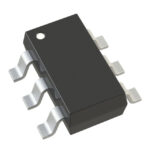 ADG751ARTZ-REEL7
The activity of extra discounts on wholesale prices is in full swing…
Please fill in your contact information and we will send you the latest wholesale price list.





