 ChipApex | Global Electronic Components Supplier
SEARCH
Search Product
Search Post
— IC芯片 | 连接器 | 传感器 | 被动器件 —
Search productSearch post
— IC芯片 | 连接器 | 传感器 | 被动器件 —
Consult the customer manager about the wholesale price.
consultation hotline:86-132-6715-2157
email:[email protected]
Contact the product manager for consultation. One-stop consultation is available.
Do you want a lower wholesale price? Please send us your inquiry and we will reply immediately.
The ADM1031ARQZ is a discontinued smart temperature monitoring and dual PWM fan control integrated circuit manufactured by Analog Devices (formerly National Semiconductor) and distributed by onsemi. It operates within a 3V to 5.5V supply range and utilizes a 16-pin QSOP package. The device integrates a local temperature sensor with ±1°C accuracy and two remote channels with ±0.5°C accuracy, covering a 0°C to 100°C monitoring range. It features an 11-bit ADC providing 0.25°C local and 0.125°C remote resolution. The IC supports SMBus communication, dual-channel PWM fan speed control with adjustable duty cycles, tachometer input for fan speed measurement, and THERM/FAN_FAULT outputs for system protection.
Verify component authenticity carefully as the ADM1031ARQZ is officially obsolete. Sourcing may involve surplus or secondary market channels rather than direct manufacturer distribution. Confirm package integrity and pin compatibility during inspection. Review datasheet revisions to ensure functional equivalence with current design requirements. Validate supplier credentials to mitigate risks associated with end-of-life components.
Select this component only if legacy ACPI compliance and specific ±1°C local accuracy are required. Evaluate alternative modern thermal monitors if new designs do not mandate the QSOP-16 form factor. Consider that dual PWM control is essential for the target application. Verify that the 3V to 5.5V operating voltage aligns with the system power rails. Assess availability constraints due to the obsolete status before finalizing the bill of materials.
This device belongs to the ADM103x family of PC system monitors developed by Analog Devices. It complements earlier models like the ADM1029 and ADM1030 by offering enhanced remote channel precision and integrated fan control. The series was designed to meet ACPI standards for personal computer thermal management. It represents a transition toward fully digital, software-configurable thermal solutions in the late 1990s and early 2000s.
Publicly confirmed substitute part numbers are not available in the provided documentation. Due to the obsolete status, engineers must evaluate generic SMBus-compatible thermal monitors or newer Analog Devices PMIC families. Cross-reference pinouts and register maps when selecting third-party alternatives to ensure mechanical and electrical compatibility.
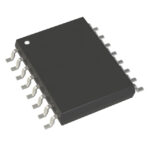 ADM1031ARQZ
The activity of extra discounts on wholesale prices is in full swing…
Please fill in your contact information and we will send you the latest wholesale price list.




