 ChipApex | Global Electronic Components Supplier
SEARCH
Search Product
Search Post
— IC芯片 | 连接器 | 传感器 | 被动器件 —
Search productSearch post
— IC芯片 | 连接器 | 传感器 | 被动器件 —
Consult the customer manager about the wholesale price.
consultation hotline:86-132-6715-2157
email:[email protected]
Contact the product manager for consultation. One-stop consultation is available.
Do you want a lower wholesale price? Please send us your inquiry and we will reply immediately.
The AOB2608L is a surface-mount N-Channel MOSFET from Alpha & Omega Semiconductor, utilizing Trench technology for optimized high-frequency switching. It features a Drain-Source Voltage (VDS) of 60 V and a continuous Drain Current (ID) of 72 A at VGS=10V. The maximum On-Resistance (RDS(ON)) is less than 8.0 mΩ at VGS=10V, with a typical value of 7.6 mΩ. Packaged in TO-263 (D2PAK), it supports a junction temperature range of -55°C to 175°C.
Verify the specific package variant required, as the datasheet covers both TO-220 and TO-263 (D2PAK) packages. Confirm that the application environment remains within the specified consumer market scope, as critical life support uses are not authorized. Ensure thermal management design accounts for the junction-to-ambient resistance characteristics provided in the datasheet.
Select this component when a 60V N-Channel MOSFET with high current capability (72A) is needed for synchronous rectification or boost topologies. The low on-resistance and gate charge parameters make it suitable for high-efficiency designs. Consider the TO-263 package for surface mount assembly requirements while ensuring adequate PCB copper area for thermal dissipation.
The AOB2608L belongs to the AOT/AOB series of N-Channel MOSFETs manufactured by Alpha & Omega Semiconductor. These devices leverage advanced trench gate technology to deliver superior performance compared to standard planar MOSFETs. The product line targets cost-effective solutions for various power supply applications requiring robust switching capabilities.
Direct substitutes must match the 60V rating, N-channel configuration, and TO-263 package. Verify that alternative components meet or exceed the 72A continuous drain current and <8.0mΩ on-resistance specifications. Ensure compatibility with existing thermal management designs due to similar power dissipation profiles.
The maximum junction temperature is 175°C, although the product is designed and qualified for the consumer market with a typical operating limit of 150°C based on junction-to-ambient thermal resistance.
No. The product has been designed and qualified for the consumer market. Applications or uses as critical components in life support devices or systems are not authorized.
The on-resistance increases with junction temperature. The datasheet provides normalized on-resistance curves showing the relationship between RDS(ON) and temperature from 25°C to 175°C.
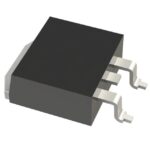 AOB2608L
The activity of extra discounts on wholesale prices is in full swing…
Please fill in your contact information and we will send you the latest wholesale price list.





