 ChipApex | Global Electronic Components Supplier

SEARCH
Search Product
Search Post
— IC芯片 | 连接器 | 传感器 | 被动器件 —
Search productSearch post
— IC芯片 | 连接器 | 传感器 | 被动器件 —
Consult the customer manager about the wholesale price.
consultation hotline:86-132-6715-2157
email:[email protected]
Contact the product manager for consultation. One-stop consultation is available.
Do you want a lower wholesale price? Please send us your inquiry and we will reply immediately.
The AOD242 is a 40V N-Channel MOSFET utilizing trench technology for high-frequency switching. It features an extremely low on-resistance of less than 5.8mΩ at VGS=10V and less than 8.2mΩ at VGS=4.5V. The device supports a continuous drain current of 5A and a pulsed current of 54A. Key electrical parameters include a gate threshold voltage range of 1.3V to 2.3V, total gate charge of 19nC to 28nC at 10V, and input capacitance of 1350pF. Thermal characteristics specify a junction-to-case resistance of 2.8°C/W and a maximum junction temperature of 175°C.
Verify the specific datasheet revision and manufacturing date code upon procurement. Confirm that the component meets the consumer market qualification standards as defined by Alpha & Omega Semiconductor. Ensure application designs do not utilize this part in life support devices or systems, as such uses are explicitly unauthorized and liability is disclaimed by the manufacturer.
Select the AOD242 when low on-resistance and fast switching speeds are required for 40V applications. Consider the thermal derating curves for ambient temperatures above 25°C. Verify that the gate drive voltage aligns with the specified thresholds for optimal RDS(ON) performance. Evaluate the package limitations regarding maximum current ratings based on the TO-252 form factor.
The AOD242 belongs to the Alpha & Omega Semiconductor lineup of N-Channel MOSFETs. It is housed in a TO-252 (DPAK) surface-mount package. The device is designed and qualified specifically for the consumer market sector. It utilizes silicon-based trench technology to achieve its electrical specifications.
Publicly confirmed substitute part numbers are not provided in the source material. Refer to the manufacturer's official documentation for approved replacements or cross-reference data.
The maximum junction temperature (TJ) and storage temperature range for the AOD242 is -55°C to 175°C.
No. This product has been designed and qualified for the consumer market. Applications or uses as critical components in life support devices or systems are not authorized.
The device undergoes 100% Unclamped Inductive Switching (UIS) testing and 100% Gate Resistance (Rg) testing.
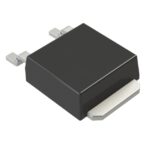 AOD242

The activity of extra discounts on wholesale prices is in full swing…
Please fill in your contact information and we will send you the latest wholesale price list.





