 ChipApex | Global Electronic Components Supplier
SEARCH
Search Product
Search Post
— IC芯片 | 连接器 | 传感器 | 被动器件 —
Search productSearch post
— IC芯片 | 连接器 | 传感器 | 被动器件 —
Consult the customer manager about the wholesale price.
consultation hotline:86-132-6715-2157
email:[email protected]
Contact the product manager for consultation. One-stop consultation is available.
Do you want a lower wholesale price? Please send us your inquiry and we will reply immediately.
The APT11GF120KRG is a single-channel, Non-Punch Through (NPT) Fast IGBT with an integrated Ultra Fast Recovery Epi-axial Diode (FRED). It features a TO-220 package and supports a collector-emitter breakdown voltage of 1200 V. The device handles a continuous collector current of 400 A at 25°C case temperature, with a maximum pulsed current of 2000 A. Total power dissipation reaches 156 W. Key electrical parameters include a gate threshold voltage of 4.5 to 6.5 V, a typical on-state voltage of 3.0 V at 8 A, and a total gate charge of 65 nC.
Verify the component against the official Microsemi/APT datasheet revision C (052-6213 Rev C 1-2006). Confirm that the suffix 'G' indicates RoHS compliance and lead-free terminal finish as documented. Ensure the TO-220 package outline matches the specified mechanical dimensions before integration.
Select this component for applications demanding high-speed switching and robust short-circuit withstand capability. Evaluate thermal management requirements based on the 156 W total power dissipation limit and junction-to-case thermal resistance. Verify that the gate drive voltage aligns with the specified 15 V operating condition for optimal performance.
This part belongs to the Fast IGBT series manufactured by Advanced Power Technology (APT), now part of Microsemi Corporation. It combines NPT IGBT technology with FRED diodes to provide enhanced switching speed and reliability compared to standard IGBT modules.
Publicly confirmed substitute part numbers are not available in the provided documentation. Cross-referencing requires matching the 1200V rating, 400A continuous current, TO-220 package, and NPT technology specifications from other manufacturers.
The 'G' suffix denotes that the device is RoHS compliant and features a lead-free terminal finish.
The maximum pulsed collector current is 2000 A.
Eon1 is defined as the clamped inductive turn-on energy of the IGBT only, without the effect of commutating diode reverse recovery current. Eon2 includes the reverse recovery current effect.
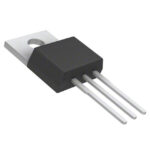 APT11GF120KRG
The activity of extra discounts on wholesale prices is in full swing…
Please fill in your contact information and we will send you the latest wholesale price list.





