 ChipApex | Global Electronic Components Supplier
SEARCH
Search Product
Search Post
— IC芯片 | 连接器 | 传感器 | 被动器件 —
Search productSearch post
— IC芯片 | 连接器 | 传感器 | 被动器件 —
Consult the customer manager about the wholesale price.
consultation hotline:86-132-6715-2157
email:[email protected]
Contact the product manager for consultation. One-stop consultation is available.
Do you want a lower wholesale price? Please send us your inquiry and we will reply immediately.
The AT43USB320A is an 8-bit microcontroller based on the AVR RISC architecture, featuring a 100-lead LQFP package. It integrates a USB hub with one attached and four external ports alongside a USB function with two programmable endpoints. The device operates at up to 12 MIPS with an 83 ns instruction cycle time. Key specifications include 512 bytes of internal data SRAM, 32 general-purpose working registers, and 32 programmable I/O pins. Power management includes a 5V operation mode with an on-chip 3.3V power supply generated from the 5V input.
Verify the specific silicon revision upon procurement, as the AT43USB320A exists in two versions distinguished by internal part numbers 55618D and 55618E. The primary technical difference lies in the SUSPEND pin polarity: version 55618D utilizes an active-low configuration, whereas version 55618E employs an active-high configuration. Ensure firmware compatibility with the selected hardware variant before integration.
Select this component for designs requiring a combined USB hub and function controller within a single 8-bit MCU. Note that the device relies on external program memory; it does not contain internal Flash or EEPROM. Designers must account for the requirement of external 0.33 µF filter capacitors on CEXT1 and CEXT2 pins for proper power supply operation and PLL stability.
This device belongs to the Atmel AT43USB series of USB microcontrollers, which were acquired by Microchip Technology. It serves as a specialized solution for applications needing simultaneous USB host/hub and device capabilities without separate discrete components. The architecture is derived from the megaAVR family but modifies standard peripherals to support complex USB transaction handling via dedicated SRAM-mapped registers.
Publicly confirmed substitute part numbers are not available in the provided documentation. Due to the specific combination of integrated USB hub and function controllers, direct pin-to-pin replacements may require significant schematic and firmware redesigns.
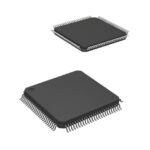 AT43USB320A-AC
The activity of extra discounts on wholesale prices is in full swing…
Please fill in your contact information and we will send you the latest wholesale price list.





