ChipApex | Global Electronic Components Supplier
SEARCH
Search Product
Search Post
— IC芯片 | 连接器 | 传感器 | 被动器件 —
Search productSearch post
— IC芯片 | 连接器 | 传感器 | 被动器件 —
Consult the customer manager about the wholesale price.
consultation hotline:86-132-6715-2157
email:[email protected]
Contact the product manager for consultation. One-stop consultation is available.
Do you want a lower wholesale price? Please send us your inquiry and we will reply immediately.
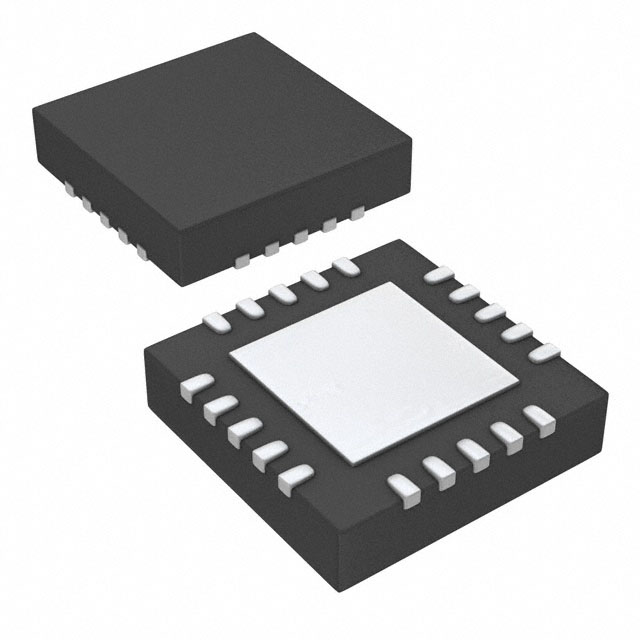
The B10G2327N55D is a two-stage fully integrated asymmetrical Doherty Monolithic Microwave Integrated Circuit (MMIC) utilizing Ampleon LDMOS technology. It integrates the carrier and peaking devices, input splitter, output combiner, and pre-match within a single package. Designed for operation between 2300 MHz and 2700 MHz, it provides high efficiency and power gain suitable for general-purpose driver or mMIMO final amplifier applications. The device features independent bias control for carrier and peaking stages, integrated ESD protection, and a 50-ohm source impedance. Typical performance at 2600 MHz with 28 V drain voltage yields approximately 46.8 dBm output power at 3 dB compression, 30 dB power gain, and 35.6% drain efficiency under LTE conditions.
Verify the specific ordering suffix Z against the manufacturer's current product status page to confirm availability and packing details. Ensure that the procurement documentation matches the SOT1462-1 package outline and dry pack requirements specified in the official data sheet. Confirm compliance with RoHS directives as indicated by the manufacturer.
Select this component when designing amplifiers requiring integrated Doherty topology to simplify matching networks and reduce board space. Verify that the application circuit can support the required thermal management, as junction temperature significantly impacts reliability. Ensure the PCB layout adheres to the recommended Rogers 4350 specifications and decoupling configurations provided in the application notes to maintain stability and performance.
This device belongs to Ampleon's portfolio of LDMOS MMICs designed for wireless infrastructure. It represents a solution for integrating complex Doherty architectures into compact packages, reducing the need for external discrete components typically required for input splitting and output combining in traditional designs.
No direct public substitute part numbers are documented in the provided datasheet. Designers should evaluate other Ampleon LDMOS MMICs with similar frequency ranges and power levels, ensuring compatibility with existing biasing schemes and thermal constraints.
 B10G2327N55DZ
The activity of extra discounts on wholesale prices is in full swing…
Please fill in your contact information and we will send you the latest wholesale price list.