 ChipApex | Global Electronic Components Supplier
SEARCH
Search Product
Search Post
— IC芯片 | 连接器 | 传感器 | 被动器件 —
Search productSearch post
— IC芯片 | 连接器 | 传感器 | 被动器件 —
Consult the customer manager about the wholesale price.
consultation hotline:86-132-6715-2157
email:[email protected]
Contact the product manager for consultation. One-stop consultation is available.
Do you want a lower wholesale price? Please send us your inquiry and we will reply immediately.
The BC857BLP4-7 is a PNP small-signal transistor manufactured by Diodes Incorporated, housed in an X2-DFN1006-3 surface-mount package. It features a collector-emitter breakdown voltage (BVCEO) of -45V and a maximum collector current (IC) of -100mA. The device offers a power dissipation rating of 1W when mounted on a 25mm x 25mm copper pad, with a thermal resistance (RθJA) of 120°C/W under these conditions. Electrical characteristics include a DC current gain (hFE) ranging from 220 to 475 at IC = -2mA and VCE = -5V, and a transition frequency (fT) of 100MHz. Operating temperature ranges from -55°C to +150°C.
Verify the specific ordering suffix '-7' corresponds to the 3,000-piece reel packaging configuration as defined in the manufacturer's ordering information. Confirm that the application environment supports the specified thermal dissipation limits, particularly noting the significant difference in power handling between standard minimum pad layouts and larger copper heatsink areas.
Select this component when board real estate is constrained due to its minimal 0.6mm² footprint and 0.4mm height. Ensure the circuit design accounts for the 1W power dissipation capability only when adequate copper area is provided; otherwise, utilize the lower 0.4W rating associated with standard minimum pad layouts. Verify compatibility with the complementary NPN type BC847BLP4 if matched pairs are required.
This part belongs to the BC857BLP series of PNP transistors designed for high-density surface-mount applications. It serves as the PNP counterpart to the BC847BLP NPN transistor within the same family. The device is engineered to replace larger legacy packages like SOT23 while maintaining similar electrical performance profiles suitable for general signal processing tasks.
BC857BLP4Q is the automotive-compliant variant available under a separate datasheet. Direct pin-compatible replacements may exist from other manufacturers using the X2-DFN1006-3 package, but electrical parameters such as hFE ranges and saturation voltages must be verified against the original specifications.
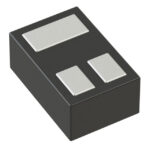 BC857BLP4-7
The activity of extra discounts on wholesale prices is in full swing…
Please fill in your contact information and we will send you the latest wholesale price list.





