ChipApex | Global Electronic Components Supplier
SEARCH
Search Product
Search Post
— IC芯片 | 连接器 | 传感器 | 被动器件 —
Search productSearch post
— IC芯片 | 连接器 | 传感器 | 被动器件 —
Consult the customer manager about the wholesale price.
consultation hotline:86-132-6715-2157
email:[email protected]
Contact the product manager for consultation. One-stop consultation is available.
Do you want a lower wholesale price? Please send us your inquiry and we will reply immediately.
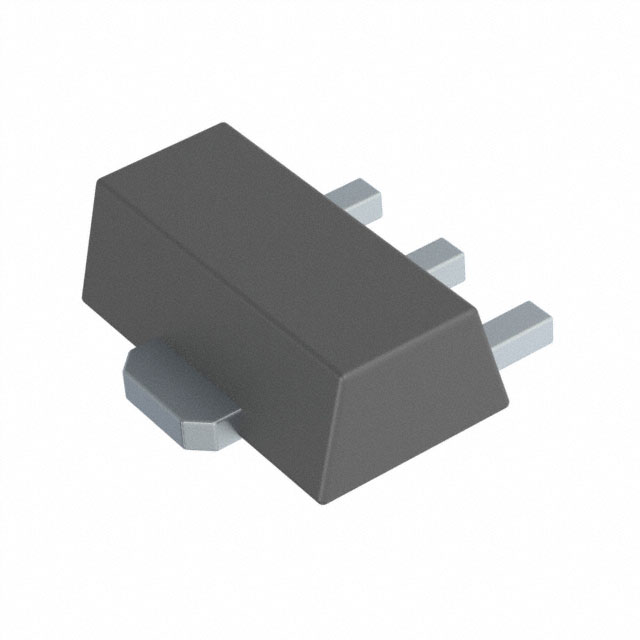
The Nexperia BCX51,115 is a PNP medium power transistor in the SOT89 surface-mounted device plastic package. It features a collector-emitter voltage of -45 V and a continuous collector current of -1 A. The device supports a peak collector current of -2 A for single pulses up to 1 ms. DC current gain ranges from 63 to 250 depending on the selection group. Power dissipation reaches 1.35 W with an adequate heatsink footprint. Transition frequency is typically 145 MHz.
Verify the specific hFE selection suffix (e.g., -10 or -16) required for your circuit design, as the base part number covers multiple gain ranges. Confirm the SOT89 package variant matches your PCB footprint requirements. Ensure compliance with RoHS directives if applicable to your manufacturing process. Check the latest datasheet revision for any updates to absolute maximum ratings before finalizing the design.
Select the appropriate hFE bin based on the required gain stability for your amplifier or switching application. The BCX51 series offers three gain groups: standard, -10, and -16. Consider the thermal resistance characteristics when designing the PCB copper area for heat dissipation. Verify that the operating voltage does not exceed the -45 V collector-emitter limit under all transient conditions.
The BCX51 belongs to the BCP51/BCX51/BC51PA family of PNP medium power transistors manufactured by Nexperia. This series provides complementary solutions to NPN devices like the BCX54. The SOT89 package is specifically designed for applications requiring better thermal performance than standard small-signal packages while maintaining a compact surface-mount form factor suitable for automated assembly.
The official NPN complement within the same series is the BCX54. Designers replacing other PNP transistors must verify pinout compatibility between the SOT89 package and the legacy component. Electrical parameters such as VCEO and IC must be compared against the limiting values table to ensure the replacement meets the circuit's stress requirements.
 BCX51,115
The activity of extra discounts on wholesale prices is in full swing…
Please fill in your contact information and we will send you the latest wholesale price list.