ChipApex | Global Electronic Components Supplier
SEARCH
Search Product
Search Post
— IC芯片 | 连接器 | 传感器 | 被动器件 —
Search productSearch post
— IC芯片 | 连接器 | 传感器 | 被动器件 —
Consult the customer manager about the wholesale price.
consultation hotline:86-132-6715-2157
email:[email protected]
Contact the product manager for consultation. One-stop consultation is available.
Do you want a lower wholesale price? Please send us your inquiry and we will reply immediately.
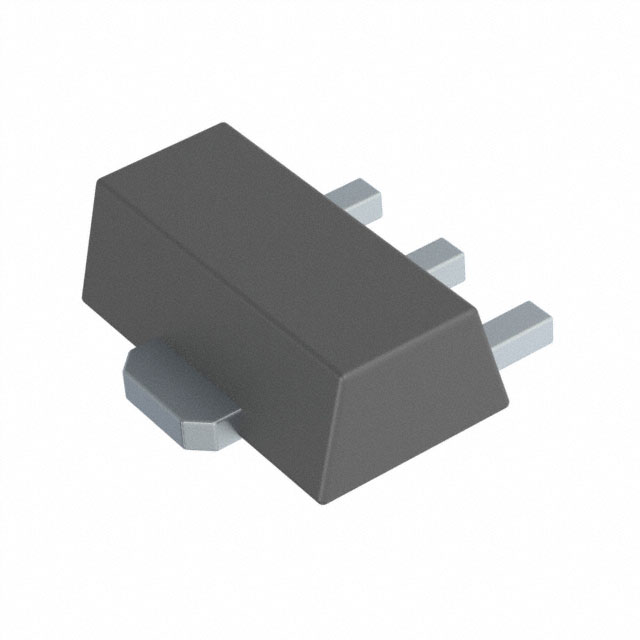
The Nexperia BCX52-16TF is a PNP power bipolar transistor housed in an SOT89 (SC-62) surface-mounted plastic package. It supports a collector current of -1 A and peak currents up to -2 A, with a maximum collector-emitter voltage of -60 V. The device offers a DC current gain range of 100 to 250 at -150 mA. Thermal resistance from junction to ambient varies based on PCB copper area, ranging from 250 K/W in free air to 114 K/W with a 6 cm² pad. Total power dissipation reaches 1100 mW under specific mounting conditions.
Verify the exact ordering suffix matches the required current gain bin. Confirm the package type corresponds to SOT89 specifications. Ensure the component meets AEC-Q101 standards if used in automotive designs. Check the latest datasheet revision for any updates to absolute maximum ratings or thermal characteristics before finalizing procurement.
Select this component when a PNP transistor with high current handling and automotive qualification is required. The BCX52-16T variant provides a specific hFE range suitable for precise biasing applications. Consider the exposed pad design for effective heat dissipation in compact layouts. Verify compatibility with the NPN complement BCX55-16T if complementary pairs are needed.
This part belongs to the BCX52T series of medium power transistors designed for surface-mount applications. It serves as the PNP counterpart to the BCX55T NPN series. The series is engineered for robust performance in power management and switching environments. The SOT89 package allows for efficient thermal transfer through the exposed collector pad.
BCX55-16T is the documented NPN complement within the same series. No other direct substitutes are listed in the official documentation.
The marking code for the BCX52-16T is C4.
Thermal resistance decreases as the copper area increases, dropping from 250 K/W in free air to 114 K/W with a 6 cm² collector mounting pad.
Yes, the product has been qualified in accordance with the AEC-Q101 standard for discrete semiconductors.
 BCX52-16TF
The activity of extra discounts on wholesale prices is in full swing…
Please fill in your contact information and we will send you the latest wholesale price list.