 ChipApex | Global Electronic Components Supplier
SEARCH
Search Product
Search Post
— IC芯片 | 连接器 | 传感器 | 被动器件 —
Search productSearch post
— IC芯片 | 连接器 | 传感器 | 被动器件 —
Consult the customer manager about the wholesale price.
consultation hotline:86-132-6715-2157
email:[email protected]
Contact the product manager for consultation. One-stop consultation is available.
Do you want a lower wholesale price? Please send us your inquiry and we will reply immediately.
The BF246A_J35Z is an obsolete N-channel RF JFET transistor manufactured by onsemi. It utilizes a TO-92-3 (TO-226AA) through-hole package and operates with a maximum drain-source voltage of 30 V and a gate-source breakdown voltage of -30 V. The device supports a continuous drain current of 15 mA and features a total power dissipation rating of 350 mW at 25°C ambient temperature, derating by 2.8 mW/°C above this threshold. It functions as a depletion-mode single transistor with a junction temperature range up to 150°C.
This component is officially classified as obsolete and no longer manufactured by onsemi. Verification of availability requires checking authorized distributors for remaining stock or approved parameter-equivalent alternatives. Ensure that any substitute part matches the original electrical specifications and pinout configuration to maintain circuit integrity without requiring design modifications.
Selection should prioritize N-channel RF JFETs with identical 30 V voltage ratings and TO-92-3 packaging. Verify that replacement devices meet the same 15 mA drain current and 350 mW power dissipation requirements. Confirm that the alternative maintains comparable transconductance and noise figure characteristics suitable for UHF frequency operations to ensure functional equivalence in existing designs.
The BF246A belongs to the BF24x series of N-channel depletion-mode JFETs designed for radio frequency applications. This series typically includes variants such as BF244 and BF245, which share similar structural characteristics but may differ in specific gain groupings or frequency response parameters. The J35Z suffix indicates a specific tape-and-reel packaging format used for automated assembly processes.
Publicly confirmed parameter-equivalent substitutes include the BF245B_J35Z from onsemi. Other potential replacements within the BF24x family should be evaluated based on matching voltage, current, and package constraints. Cross-compatibility must be verified against the specific application's frequency and gain requirements.
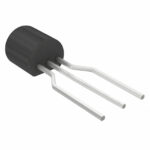 BF246A_J35Z
The activity of extra discounts on wholesale prices is in full swing…
Please fill in your contact information and we will send you the latest wholesale price list.






