 ChipApex | Global Electronic Components Supplier
SEARCH
Search Product
Search Post
— IC芯片 | 连接器 | 传感器 | 被动器件 —
Search productSearch post
— IC芯片 | 连接器 | 传感器 | 被动器件 —
Consult the customer manager about the wholesale price.
consultation hotline:86-132-6715-2157
email:[email protected]
Contact the product manager for consultation. One-stop consultation is available.
Do you want a lower wholesale price? Please send us your inquiry and we will reply immediately.
The BFG403W,115 is an NPN double polysilicon wideband transistor with a buried layer, designed for low voltage applications. It is housed in a plastic 4-pin dual-emitter SOT343R package. Key electrical parameters include a maximum collector-base voltage of 10 V, a maximum collector-emitter voltage of 4.5 V, and a maximum DC collector current of 3.6 mA. The device features a transition frequency of 17 GHz at IC = 3 mA and VCE = 2 V. Maximum power gain reaches 22 dB under the same conditions. Total power dissipation is limited to 16 mW when the soldering point temperature is 140 °C or lower.
Verify the specific ordering suffix against official documentation to confirm packaging orientation and tape reel specifications. Ensure that the component status aligns with current production requirements, as datasheets may indicate superseded versions. Confirm compliance with relevant environmental directives by checking material declarations provided in official product information before initiating procurement processes.
Select this component for designs requiring high gain and low noise at frequencies up to 17 GHz. Verify that the operating collector current remains within the specified limits to maintain performance characteristics. Consider the thermal resistance from junction to soldering point when designing heat dissipation strategies. Ensure impedance matching networks are optimized for the intended operating frequency band to achieve maximum power gain.
This transistor belongs to the BFG series of wideband transistors manufactured by NXP Semiconductors. The series includes variants with different frequency capabilities and package types. The BFG403W specifically targets low-voltage, high-frequency applications utilizing a double polysilicon process technology. It serves as a discrete solution for RF signal amplification in consumer electronics and communication devices.
Consult official NXP documentation for direct substitutes. Cross-referencing requires matching package type, pinout configuration, and electrical ratings. Verify compatibility with existing circuit designs before implementation.
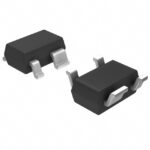 BFG403W,115
The activity of extra discounts on wholesale prices is in full swing…
Please fill in your contact information and we will send you the latest wholesale price list.





