ChipApex | Global Electronic Components Supplier
SEARCH
Search Product
Search Post
— IC芯片 | 连接器 | 传感器 | 被动器件 —
Search productSearch post
— IC芯片 | 连接器 | 传感器 | 被动器件 —
Consult the customer manager about the wholesale price.
consultation hotline:86-132-6715-2157
email:[email protected]
Contact the product manager for consultation. One-stop consultation is available.
Do you want a lower wholesale price? Please send us your inquiry and we will reply immediately.
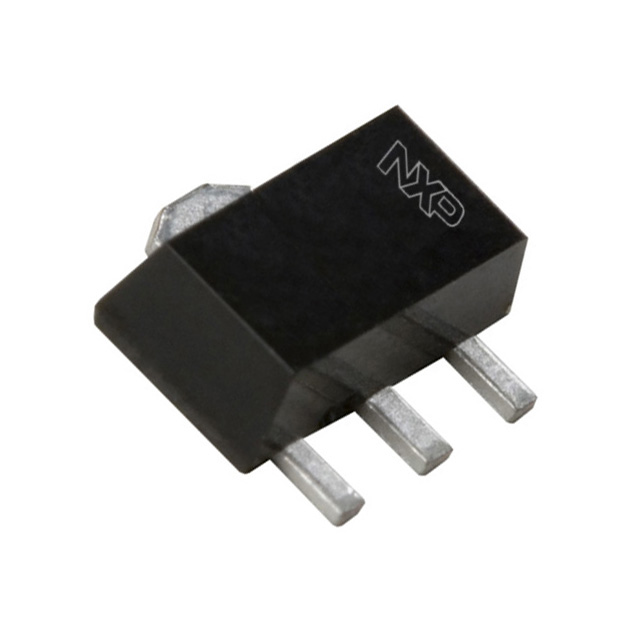
The BFQ540,115 is an NPN wideband silicon transistor designed for high-frequency applications. It features a transition frequency of 9 GHz and delivers an insertion power gain of 13 dB at 900 MHz with a noise figure as low as 1.9 dB. The device supports a maximum collector current of 120 mA and dissipates up to 1.2 W of power when the soldering point temperature is maintained at or below 60 °C. Voltage ratings include 20 V for collector-base and 15 V for collector-emitter configurations. Packaged in the SOT89 plastic surface-mount format, it utilizes gold metallization to ensure reliability and includes an exposed die pad for efficient thermal transfer.
Verify component authenticity by checking the marking code against official documentation. The BFQ540,115 typically carries the marking code N4. Confirm that the package matches the SOT89 outline specifications. Ensure the sourcing channel provides valid traceability records. Cross-reference the ordering information to confirm compatibility with design requirements before integration.
Select this component for circuits requiring high gain and low noise in the VHF and UHF bands. Evaluate the thermal management strategy to maintain the soldering point temperature within the specified limits during operation. Consider the 120 mA DC collector current limit when designing bias networks. Verify that the operating conditions align with the absolute maximum ratings provided in the datasheet to prevent permanent damage.
The BFQ540 is an NPN wideband transistor originally developed by Philips Semiconductors, which later became NXP Semiconductors. This specific part number represents the version manufactured under the NXP brand. The product data sheet was last revised on March 21, 2013. It serves as a standard solution for broadband amplification tasks where signal integrity and gain are critical parameters.
Consult the manufacturer's documentation for officially confirmed substitute part numbers. Ensure any replacement maintains identical pinning, package dimensions, and electrical characteristics. Verify that alternative components meet the same thermal and voltage requirements.
 BFQ540,115
The activity of extra discounts on wholesale prices is in full swing…
Please fill in your contact information and we will send you the latest wholesale price list.