ChipApex | Global Electronic Components Supplier
SEARCH
Search Product
Search Post
— IC芯片 | 连接器 | 传感器 | 被动器件 —
Search productSearch post
— IC芯片 | 连接器 | 传感器 | 被动器件 —
Consult the customer manager about the wholesale price.
consultation hotline:86-132-6715-2157
email:[email protected]
Contact the product manager for consultation. One-stop consultation is available.
Do you want a lower wholesale price? Please send us your inquiry and we will reply immediately.
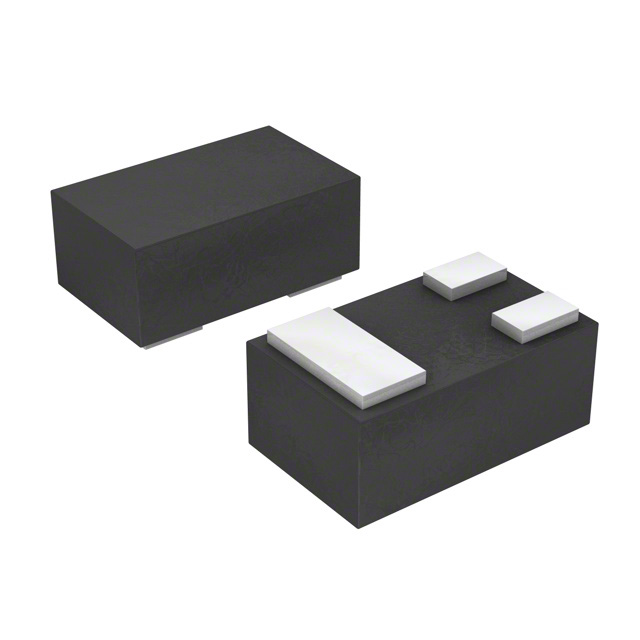
The BFR740L3RH is a SiGe:C NPN RF heterojunction bipolar transistor (HBT) designed for wideband applications. It operates with a collector-emitter voltage of up to 13 V and supports a transition frequency of 42 GHz. Key electrical parameters include a minimum noise figure of 0.45 dB at 150 MHz and 0.8 dB at 5.5 GHz, measured at 3 V and 6 mA bias. Maximum power gain reaches 35 dB at 150 MHz and 20 dB at 5.5 GHz under 15 mA bias conditions. The device features low thermal resistance and is housed in a TSLP-3-9 leadless package.
Verify the complete ordering code BFR740L3RHE6327XTSA1 against official Infineon documentation to ensure correct reel quantity and tape specifications. Confirm that the TSLP-3-9 package marking matches the required revision level. Check for ESD handling requirements during storage and assembly processes to prevent device degradation.
Select this component when designing circuits requiring high linearity and low noise in the sub-12 GHz range. Ensure the bias network supports the specified 3 V operating voltage and current levels between 6 mA and 15 mA. Verify that the PCB layout accommodates the specific footprint dimensions of the TSLP-3-9 package for proper thermal dissipation and signal integrity.
This part belongs to the BFR740L3RH series of SiGe:C NPN RF transistors manufactured by Infineon Technologies. It is specifically engineered for high-frequency analog and RF applications where low noise and high gain are critical. The device utilizes advanced heterojunction bipolar transistor technology to achieve superior performance metrics compared to standard silicon alternatives.
Consult official Infineon cross-reference guides for verified substitutes. No direct public substitute part numbers are listed in the provided datasheet. Any replacement must match the TSLP-3-9 package, pin configuration, and electrical characteristics defined in the original specification.
The absolute maximum collector-emitter voltage (VCES) is 13 V when the base-emitter junction is short-circuited.
The minimum noise figure increases with frequency, ranging from 0.45 dB at 150 MHz to 1.5 dB at 12 GHz under standard test conditions.
The transition frequency (fT) is typically 42 GHz, measured at a collector current of 25 mA and a collector-emitter voltage of 3 V.
 BFR740L3RHE6327XTSA1
The activity of extra discounts on wholesale prices is in full swing…
Please fill in your contact information and we will send you the latest wholesale price list.