ChipApex | Global Electronic Components Supplier
SEARCH
Search Product
Search Post
— IC芯片 | 连接器 | 传感器 | 被动器件 —
Search productSearch post
— IC芯片 | 连接器 | 传感器 | 被动器件 —
Consult the customer manager about the wholesale price.
consultation hotline:86-132-6715-2157
email:[email protected]
Contact the product manager for consultation. One-stop consultation is available.
Do you want a lower wholesale price? Please send us your inquiry and we will reply immediately.
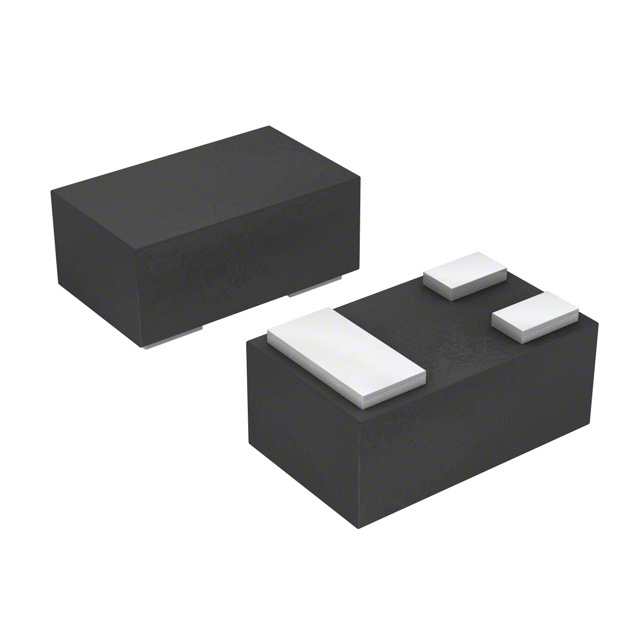
The BFR843EL3 is a low noise dual band pre-matched RF bipolar transistor in a TSLP-3-10 package. It features high transition frequency for best-in-class noise performance at high frequencies, with NFmin of 1 dB at 2.4 GHz and 1.15 dB at 5.5 GHz (VCE=1.8 V, IC=8 mA). Maximum power gain reaches 24 dB at 2.4 GHz and 21.5 dB at 5.5 GHz (VCE=1.8 V, IC=15 mA). The device supports 20 dBm maximum RF input power and 1 kV HBM ESD hardness. It operates at low voltages including 1.2 V and 1.8 V, suitable for WLAN, LTE, WiMAX, and satellite navigation systems.
Verify the ordering code BFR843EL3E6327XTSA1 matches the required TSLP-3-10 package and marking code T2. Confirm industrial qualification per JEDEC standards. Ensure handling precautions are observed due to ESD sensitivity. Check reel quantity specifications if bulk procurement is planned. Validate supply chain authenticity through authorized Infineon channels.
Select this component for designs requiring low noise figure and high linearity in dual-band RF front ends. Ensure bias conditions align with the specified 1.8 V collector-emitter voltage for optimal AC characteristics. Consider the integrated feedback capacitance when designing matching networks. Verify thermal management capabilities given the 125 mW total power dissipation limit.
This part belongs to Infineon's BFR843 series of low noise broadband pre-matched RF bipolar transistors. It is specifically engineered for high-speed, low-power consumption applications in wireless communication devices. The device integrates internal matching to simplify circuit design while maintaining robust RF performance across multiple frequency bands.
No public confirmed substitute part numbers are available in the provided documentation. Engineers should consult Infineon directly for alternative components with similar electrical characteristics and package dimensions.
The minimum noise figure (NFmin) is 1.15 dB at 5.5 GHz, measured at VCE = 1.8 V and IC = 8 mA.
Yes, the BFR843EL3 is qualified for industrial applications according to the relevant tests of JEDEC47/20/22.
The device supports a maximum RF input power of 20 dBm when matched to 50 Ω at f = 1.9 GHz.
 BFR843EL3E6327XTSA1
The activity of extra discounts on wholesale prices is in full swing…
Please fill in your contact information and we will send you the latest wholesale price list.