ChipApex | Global Electronic Components Supplier
SEARCH
Search Product
Search Post
— IC芯片 | 连接器 | 传感器 | 被动器件 —
Search productSearch post
— IC芯片 | 连接器 | 传感器 | 被动器件 —
Consult the customer manager about the wholesale price.
consultation hotline:86-132-6715-2157
email:[email protected]
Contact the product manager for consultation. One-stop consultation is available.
Do you want a lower wholesale price? Please send us your inquiry and we will reply immediately.
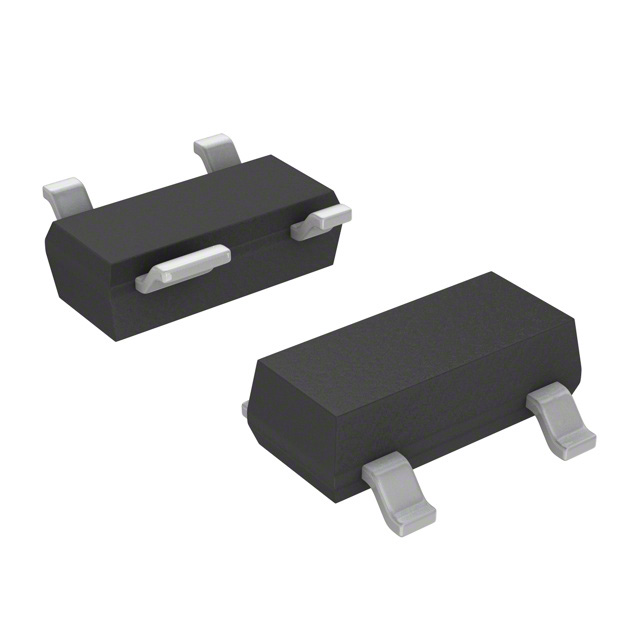
The BFU520XRVL is an NPN wideband silicon RF transistor from the BFU5 family, designed for high-speed, low-noise applications up to 2 GHz. It utilizes 11 GHz fT technology and features a plastic SOT143R package with reverse pinning. The device is AEC-Q101 qualified and offers a minimum noise figure of 0.65 dB at 900 MHz with a maximum stable gain of 20 dB at the same frequency. Key electrical limits include a collector-base voltage of 24 V (open emitter) or 30 V (shorted base), a collector-emitter voltage of 12 V (open base) or 24 V (shorted base), and a total power dissipation of 450 mW.
Verify the specific suffix against official documentation to confirm manufacturing origin details. Ensure compatibility with the SOT143R footprint and reverse pin configuration during procurement. Confirm that the component meets the required automotive qualification standards if deployed in vehicle systems. Cross-reference the ordering information table to validate the exact part number variant before placing orders.
Select this component for designs requiring high supply voltages and high breakdown characteristics within small signal to medium power ranges. Evaluate the trade-off between noise figure and gain based on the specific collector current requirements. Consider the thermal resistance characteristics when designing heat dissipation paths for the surface-mounted package.
This transistor belongs to the BFU5 series of NPN wideband silicon RF transistors manufactured by NXP Semiconductors. The series includes variants such as the BFU520A, BFU520YX, and BFU530XR, all sharing similar low-noise, high-breakdown technologies optimized for frequencies up to 2 GHz. The BFU520XR specifically distinguishes itself through its SOT143R packaging and reverse pinning arrangement.
BFU520A
The transition frequency is typically 10.5 GHz under conditions of IC = 10 mA and VCE = 8 V.
With the base open, the maximum collector-emitter voltage is 12 V. With the base shorted to the emitter, it increases to 24 V.
Yes, the device is AEC-Q101 qualified, indicating suitability for automotive electronics environments.
 BFU520XRVL
The activity of extra discounts on wholesale prices is in full swing…
Please fill in your contact information and we will send you the latest wholesale price list.