ChipApex | Global Electronic Components Supplier
SEARCH
Search Product
Search Post
— IC芯片 | 连接器 | 传感器 | 被动器件 —
Search productSearch post
— IC芯片 | 连接器 | 传感器 | 被动器件 —
Consult the customer manager about the wholesale price.
consultation hotline:86-132-6715-2157
email:[email protected]
Contact the product manager for consultation. One-stop consultation is available.
Do you want a lower wholesale price? Please send us your inquiry and we will reply immediately.
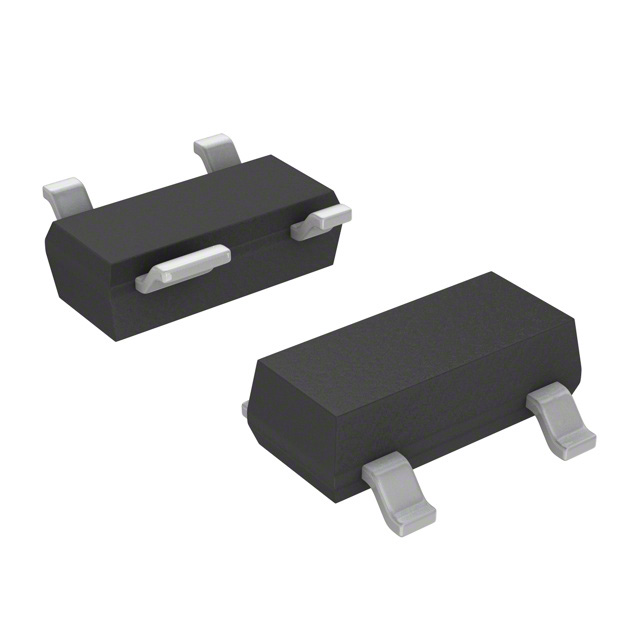
The BFU550XRVL is an NPN wideband silicon RF transistor from the BFU5 family, designed for high-speed, low-noise applications up to 2 GHz. It utilizes 11 GHz fT technology and is housed in a plastic SOT143R package with reverse pinning. The device features a collector-emitter voltage of 12 V, maximum collector current of 50 mA, and total power dissipation of 450 mW. Key electrical parameters include a minimum noise figure of 0.7 dB at 900 MHz and a maximum stable gain of 21.5 dB at the same frequency. It is AEC-Q101 qualified for automotive reliability.
Verify the specific suffix 'VL' against the official datasheet, as standard documentation typically lists 'BFU550XR'. Confirm availability status directly with NXP Semiconductors or authorized distributors, as component lifecycle status may vary. Ensure ESD handling precautions are strictly followed during storage and assembly to prevent damage to the sensitive semiconductor junctions.
Select this component for designs requiring high linearity and low noise in the sub-2 GHz range. The SOT143R package offers a compact footprint suitable for space-constrained PCB layouts. Consider the thermal resistance characteristics when designing heat dissipation paths, as power derating is dependent on the solder point temperature. Verify impedance matching networks for optimal gain and noise figure performance at target frequencies.
The BFU550XR belongs to the BFU5 series of NPN wideband silicon RF transistors manufactured by NXP Semiconductors. This family is engineered for small signal to medium power applications, providing a balance between high breakdown voltage and low noise performance. The device is part of NXP's portfolio for automotive and industrial RF solutions.
Consult the official NXP replacement guide for verified substitutes. Generic equivalents may not match the specific AEC-Q101 qualification or the precise S-parameter profiles required for broadband ISM applications. Validate pin compatibility and thermal characteristics before substitution.
 BFU550XRVL
The activity of extra discounts on wholesale prices is in full swing…
Please fill in your contact information and we will send you the latest wholesale price list.