ChipApex | Global Electronic Components Supplier
SEARCH
Search Product
Search Post
— IC芯片 | 连接器 | 传感器 | 被动器件 —
Search productSearch post
— IC芯片 | 连接器 | 传感器 | 被动器件 —
Consult the customer manager about the wholesale price.
consultation hotline:86-132-6715-2157
email:[email protected]
Contact the product manager for consultation. One-stop consultation is available.
Do you want a lower wholesale price? Please send us your inquiry and we will reply immediately.
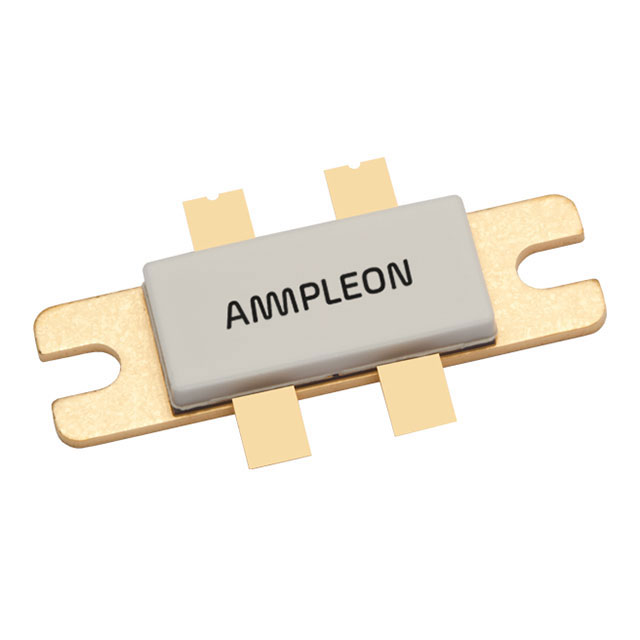
The BLF6G22L-40BN is a 40 W LDMOS power transistor designed for base station applications operating between 2000 MHz and 2200 MHz. It features an internally matched design with integrated ESD protection, current sense, and excellent ruggedness. The device operates at a supply voltage of 28 V with a drain-source breakdown voltage of 65 V. Typical performance in a 2-carrier W-CDMA test circuit at 2110 MHz to 2170 MHz includes an average output power of 2.5 W, a power gain of 19 dB, an efficiency of 16%, and an ACPR of -50 dBc. It utilizes the SOT1112A flanged ceramic package.
Verify the specific ordering suffix against official Ampleon documentation to ensure correct package version and compliance status. Confirm RoHS directive compliance requirements prior to procurement. Check product status updates on the manufacturer website as specifications may change without notice. Ensure handling procedures account for electrostatic discharge sensitivity during transport and assembly.
Select this component for broadband operations within the 2000 MHz to 2200 MHz range requiring high efficiency and ruggedness. Evaluate thermal resistance characteristics for heat dissipation requirements in class-AB production test circuits. Consider the internal matching network when designing input and output impedance structures. Verify quiescent current settings align with the specified 345 mA typical value for optimal performance.
This device belongs to the BLF6G22L series of power LDMOS transistors manufactured by Ampleon USA Inc. It is specifically engineered for wireless infrastructure, providing robust performance in multi-carrier environments. The part replaces earlier iterations or variants within the broader LDMOS portfolio, maintaining compatibility with standard base station amplifier architectures while offering enhanced integration through internal matching and sensing capabilities.
Consult official Ampleon documentation for confirmed substitute part numbers. Cross-compatibility claims should be avoided unless explicitly stated by the manufacturer. Verify pinout and thermal characteristics match existing designs before implementing any alternative components.
 BLF6G22L-40BN,118
The activity of extra discounts on wholesale prices is in full swing…
Please fill in your contact information and we will send you the latest wholesale price list.