ChipApex | Global Electronic Components Supplier

SEARCH
Search Product
Search Post
— IC芯片 | 连接器 | 传感器 | 被动器件 —
Search productSearch post
— IC芯片 | 连接器 | 传感器 | 被动器件 —
Consult the customer manager about the wholesale price.
consultation hotline:86-132-6715-2157
email:[email protected]
Contact the product manager for consultation. One-stop consultation is available.
Do you want a lower wholesale price? Please send us your inquiry and we will reply immediately.
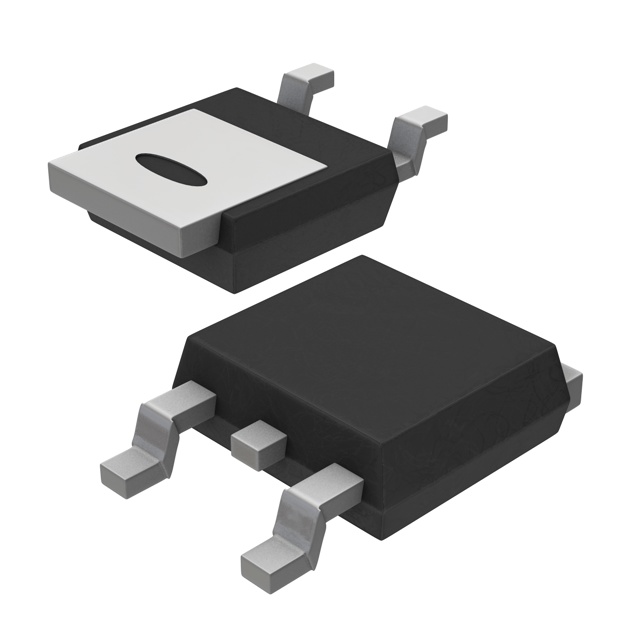
The BUK7214-75B is a standard level N-channel enhancement mode Field-Effect Transistor utilizing TrenchMOS technology in a DPAK (SOT428) plastic package. Designed for automotive critical applications, it meets AEC-Q101 standards and supports junction temperatures up to 175 °C. Key electrical parameters include a drain-source voltage of 75 V, a continuous drain current of 69 A at 25 °C mounting base temperature, and a maximum total power dissipation of 158 W. The device exhibits a typical on-state resistance of 12.6 mΩ at 25 °C and 33 mΩ at 175 °C when driven by a 10 V gate-source voltage with a 25 A drain current.
Verify the specific ordering suffix and package variant against the official Nexperia datasheet before procurement. Confirm that the component status remains active or qualified for your design lifecycle requirements. Ensure compatibility with your assembly processes regarding the DPAK (SOT428) surface-mount package dimensions and thermal management needs.
Select this component for high-current switching applications requiring robust automotive qualification and high-temperature operation. The standard level gate drive compatibility simplifies driver circuit design compared to logic-level alternatives. Evaluate the thermal resistance characteristics to ensure adequate heat sinking for the intended power dissipation levels in your specific enclosure environment.
This part belongs to Nexperia's BUK7 series of N-channel TrenchMOS FETs, specifically engineered for automotive use. It utilizes advanced trench gate technology to achieve low on-resistance and fast switching speeds within a compact DPAK package. The series is designed to meet stringent automotive quality standards while providing reliable performance in power distribution and load control circuits.
Consult the Nexperia product selector for direct replacements within the BUK7 series. Verify pinout compatibility and electrical parameter margins when substituting with other N-channel MOSFETs. Ensure any alternative component also meets AEC-Q101 requirements if used in automotive applications.
 BUK7214-75B,118

The activity of extra discounts on wholesale prices is in full swing…
Please fill in your contact information and we will send you the latest wholesale price list.