 ChipApex | Global Electronic Components Supplier
SEARCH
Search Product
Search Post
— IC芯片 | 连接器 | 传感器 | 被动器件 —
Search productSearch post
— IC芯片 | 连接器 | 传感器 | 被动器件 —
Consult the customer manager about the wholesale price.
consultation hotline:86-132-6715-2157
email:[email protected]
Contact the product manager for consultation. One-stop consultation is available.
Do you want a lower wholesale price? Please send us your inquiry and we will reply immediately.
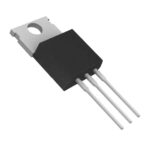
BUZ71 is an N-channel enhancement mode power MOSFET manufactured by Harris Corporation. It features a silicon metal-oxide semiconductor construction housed in a TO-220AB flange mount package with three through-hole terminals. The device is designed for high-power switching applications, supporting a maximum drain current of 14A and a drain-source breakdown voltage of 50V. It exhibits a maximum on-resistance of 0.1 ohm and can dissipate up to 40W of power. The component operates in enhancement mode with a maximum junction temperature of 150°C.
Verify the manufacturer origin carefully, as the BUZ71 part number was originally developed by Motorola and is widely produced by multiple vendors including STMicroelectronics and Intersil. Confirm that the specific unit matches the required electrical specifications, particularly the on-resistance and current ratings, as variations exist across different manufacturers. Ensure the package type corresponds to the intended PCB layout requirements.
Select this component when designing circuits requiring an N-channel power MOSFET with moderate voltage ratings and high current capacity. The TO-220AB package facilitates direct mounting to heat sinks, making it suitable for applications where thermal dissipation is critical. Consider the 50V breakdown voltage limit when determining suitability for specific supply voltages and transient conditions.
The BUZ71 belongs to the class of N-channel enhancement mode power MOS transistors. These devices are standard components in power electronics, utilized for their ability to handle significant power levels efficiently. The technology relies on silicon metal-oxide semiconductor structures to achieve low on-resistance and fast switching speeds, forming a foundational element in various industrial and consumer power conversion topologies.
Direct substitutes include BUZ71D1, BUZ71A16, and BUZ71L from NXP/Motorola. Cross-manufacturer equivalents such as IRF830 or MTH40N06 may be considered if pin compatibility and electrical parameters align with the design requirements.
 BUZ71
BUZ71
The activity of extra discounts on wholesale prices is in full swing…
Please fill in your contact information and we will send you the latest wholesale price list.





