 ChipApex | Global Electronic Components Supplier
SEARCH
Search Product
Search Post
— IC芯片 | 连接器 | 传感器 | 被动器件 —
Search productSearch post
— IC芯片 | 连接器 | 传感器 | 被动器件 —
Consult the customer manager about the wholesale price.
consultation hotline:86-132-6715-2157
email:[email protected]
Contact the product manager for consultation. One-stop consultation is available.
Do you want a lower wholesale price? Please send us your inquiry and we will reply immediately.
The C3M0025065D is a third-generation silicon carbide (SiC) MOSFET from Wolfspeed, packaged in a TO-247-3 through-hole footprint. It features an N-channel enhancement mode configuration with a drain-source voltage rating of 650 V and a maximum gate-source voltage of +19 V transient. At 25°C case temperature, the device supports a continuous drain current of 97 A and exhibits a typical on-resistance of 25 mΩ. The component operates within a junction temperature range of -40°C to +175°C, with a power dissipation capacity of 326 W at 25°C case temperature.
Verify the specific datasheet revision against the manufacturer's official documentation prior to design finalization. Confirm that the TO-247-3 package dimensions align with the target PCB layout requirements. Ensure thermal management solutions accommodate the specified junction-to-case thermal resistance and power dissipation limits under actual operating conditions.
Select this component for designs requiring high efficiency and increased power density in hard-switching topologies. The low on-resistance and fast switching characteristics support higher system switching frequencies. Verify compatibility with recommended gate drive voltages (+15V turn-on, -4V turn-off) to optimize performance and ensure safe operating area compliance during transient events.
This device belongs to the Wolfspeed C3M series of discrete silicon carbide power MOSFETs. It utilizes Wolfspeed's proprietary C3M technology to deliver enhanced performance over previous generations. The product line targets applications demanding robust power conversion capabilities within industry-standard package footprints, facilitating flexible system upgrades and cost optimization.
Consult official Wolfspeed documentation for verified substitute part numbers. Do not assume functional equivalence with other manufacturers' devices without comprehensive electrical and thermal validation.
The datasheet specifies a recommended turn-on gate voltage of 15 V and a turn-off voltage of -4 V.
The on-resistance increases as the junction temperature rises, reaching approximately 33 mΩ at 175°C compared to 25 mΩ at 25°C.
Yes, the device features a fast intrinsic diode with low reverse recovery charge, making it suitable for applications requiring frequent diode recovery cycles.
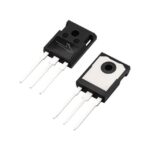 C3M0025065D
The activity of extra discounts on wholesale prices is in full swing…
Please fill in your contact information and we will send you the latest wholesale price list.





