ChipApex | Global Electronic Components Supplier
SEARCH
Search Product
Search Post
— IC芯片 | 连接器 | 传感器 | 被动器件 —
Search productSearch post
— IC芯片 | 连接器 | 传感器 | 被动器件 —
Consult the customer manager about the wholesale price.
consultation hotline:86-132-6715-2157
email:[email protected]
Contact the product manager for consultation. One-stop consultation is available.
Do you want a lower wholesale price? Please send us your inquiry and we will reply immediately.
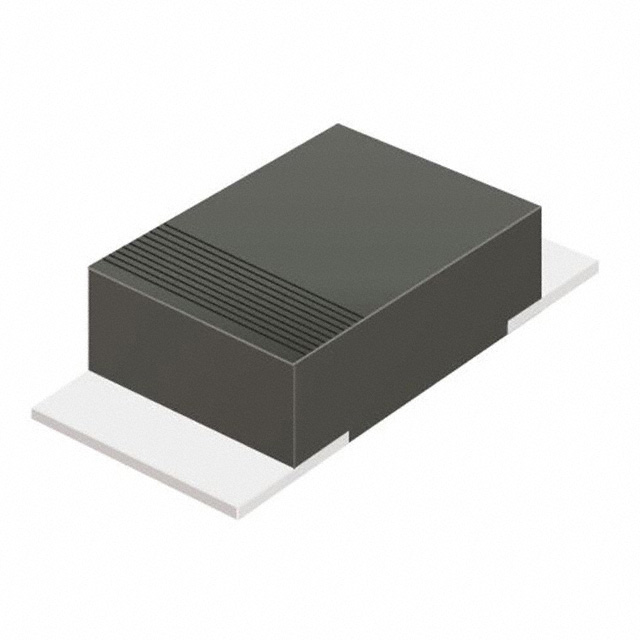
The CDBFN140-HF is a Schottky barrier rectifier manufactured by Comchip Technology, housed in an SOD-323 surface-mount package. It features a maximum repetitive peak reverse voltage (VRRM) of 40 V and a forward current (IF) of 1 A. The device exhibits a maximum DC blocking voltage of 40 V and a maximum RMS voltage of 28 V. Electrical characteristics include a maximum instantaneous forward voltage of 500 mV at 1 A and a maximum reverse current of 500 µA. The component supports a forward surge current (IFSM) of 9 A and operates within a temperature range of -55 °C to +125 °C.
Verify the specific suffix designation against official manufacturer documentation to confirm exact electrical tolerances and packaging configurations. Ensure that the procurement channel provides valid traceability records consistent with MIL-STD requirements. Cross-reference the part number with the latest datasheet revisions to confirm compliance with RoHS directives and halogen-free status before finalizing acquisition orders.
Select this component when circuit designs require a compact SOD-323 footprint combined with 40 V reverse voltage blocking capability. The 1 A forward current rating suits moderate power applications where low forward voltage drop is critical for efficiency. Consider the thermal resistance characteristics and operating temperature limits relative to the intended ambient environment and heat dissipation constraints of the host system.
This device belongs to the Comchip Technology CDBFN series of low-profile Schottky barrier rectifiers. The series is characterized by its small outline package dimensions designed to optimize printed circuit board real estate. These components are engineered to provide superior performance in terms of switching speed and thermal management compared to standard rectifier alternatives.
Consult official substitution guides for compatible equivalents. Verify pinout compatibility and electrical parameter margins before implementing any alternative components in existing designs.
The maximum operating temperature for this component is +125 °C.
Yes, the device incorporates a guardring structure specifically designed to provide overvoltage protection.
 CDBFN140-HF
The activity of extra discounts on wholesale prices is in full swing…
Please fill in your contact information and we will send you the latest wholesale price list.