 ChipApex | Global Electronic Components Supplier
SEARCH
Search Product
Search Post
— IC芯片 | 连接器 | 传感器 | 被动器件 —
Search productSearch post
— IC芯片 | 连接器 | 传感器 | 被动器件 —
Consult the customer manager about the wholesale price.
consultation hotline:86-132-6715-2157
email:[email protected]
Contact the product manager for consultation. One-stop consultation is available.
Do you want a lower wholesale price? Please send us your inquiry and we will reply immediately.
The CMX869BD2-TR1K is a low-power V.32 bis automode modem IC manufactured by CML Microcircuits, designed for EPOS terminals and telephone telemetry systems. It supports ITU V.32 bis automode operation with automatic fallback from 14400 bps to 4800 bps, alongside manual modes for V.22 bis, V.22, V.21, Bell 103, V.23, and Bell 202 protocols. The device integrates a high-performance DTMF codec, ring detector, and relay driver. It operates on a single 3.3V supply over a temperature range of -40°C to +85°C. Data transfer utilizes a serial C-BUS interface supporting asynchronous, synchronous, and HDLC modes in 8- or 16-bit formats.
Verify the specific suffix 'D2' corresponds to the SOIC package variant as indicated in the datasheet signal list. Confirm the '-TR1K' suffix aligns with the required reel packaging quantity for production integration. Ensure the component version matches the May 2008 datasheet revision D/869B/3 for accurate electrical specifications and pinout definitions during procurement validation.
Select this component when designing systems requiring a single-chip solution for V.32 bis automode communication alongside DTMF signaling. It is suitable for applications needing integrated line interface drivers and ring detection without external discrete components. Consider the 3.3V supply requirement and the availability of the SOIC package variant if surface-mount space constraints favor this footprint over TSSOP.
This part belongs to the CMX869B family of low-power modems from CML Microcircuits. The base model CMX869B offers identical functional specifications, with variations primarily defined by package type and manufacturing lot revisions. The CMX869 series is positioned within CML's portfolio for telecommunications interface ICs, specifically targeting legacy voice-band data transmission standards in embedded control environments.
Public confirmed substitute part numbers are not available in the provided documentation. Designers should verify compatibility with existing host microcontroller interfaces and line transformer requirements before considering alternative vendors, as the integrated hybrid and DTMF functions may require significant schematic redesigns if replaced.
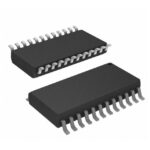 CMX869BD2-TR1K
The activity of extra discounts on wholesale prices is in full swing…
Please fill in your contact information and we will send you the latest wholesale price list.





