ChipApex | Global Electronic Components Supplier
SEARCH
Search Product
Search Post
— IC芯片 | 连接器 | 传感器 | 被动器件 —
Search productSearch post
— IC芯片 | 连接器 | 传感器 | 被动器件 —
Consult the customer manager about the wholesale price.
consultation hotline:86-132-6715-2157
email:[email protected]
Contact the product manager for consultation. One-stop consultation is available.
Do you want a lower wholesale price? Please send us your inquiry and we will reply immediately.
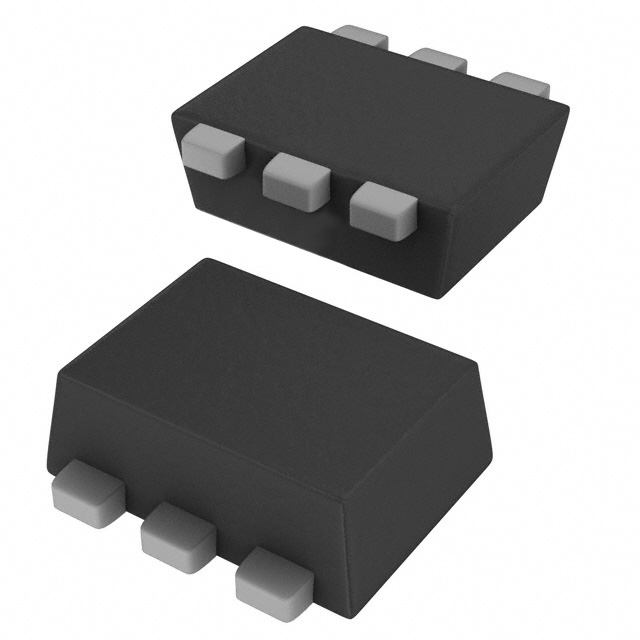
The DMC2991UDJ is a complementary pair enhancement mode MOSFET manufactured by Diodes Incorporated. It integrates an N-channel and a P-channel device within a single SOT-963 (SOT563) surface-mount package measuring 1mm x 1mm. The N-channel transistor provides a maximum drain-source voltage of 20V with a continuous drain current of 500mA at 25°C, while the P-channel counterpart offers -20V breakdown and -360mA continuous current. Both channels feature low on-state resistance and fast switching speeds, supported by a total power dissipation rating of 0.38W and an operating temperature range from -55°C to +150°C.
Verify the specific ordering suffix when purchasing. The standard part number DMC2991UDJ-7 utilizes a tape and reel carrier with a packing quantity of 10,000 units. An alternative suffix, -7B, exists which indicates a different taping orientation but maintains identical electrical characteristics. Confirm the required reel orientation matches your automated assembly equipment specifications before placing orders.
Select this component for designs requiring matched N/P-channel pairs in minimal board space. Ensure the application current remains below the 500mA limit for the N-channel and 360mA for the P-channel at 25°C ambient conditions. Verify that the gate drive voltage meets the minimum requirements to achieve the specified low on-resistance values across the intended operating temperature range.
This device belongs to Diodes Incorporated's portfolio of small-signal complementary MOSFET arrays designed for portable electronics and battery-powered systems. It serves as a compact solution for load switching and signal routing where board area is constrained. The SOT-963 package allows for high-density PCB layouts compared to discrete dual-transistor solutions.
Direct pin-compatible replacements include the DMN2991UDA-7B and DMC2990UDJQ-7. Verify that the substitute devices maintain equivalent voltage ratings, current capabilities, and thermal performance suitable for the specific circuit requirements.
 DMC2991UDJ-7
The activity of extra discounts on wholesale prices is in full swing…
Please fill in your contact information and we will send you the latest wholesale price list.