 ChipApex | Global Electronic Components Supplier
SEARCH
Search Product
Search Post
— IC芯片 | 连接器 | 传感器 | 被动器件 —
Search productSearch post
— IC芯片 | 连接器 | 传感器 | 被动器件 —
Consult the customer manager about the wholesale price.
consultation hotline:86-132-6715-2157
email:[email protected]
Contact the product manager for consultation. One-stop consultation is available.
Do you want a lower wholesale price? Please send us your inquiry and we will reply immediately.
The DMT6017LSS-13 is a single N-channel enhancement mode MOSFET manufactured by Diodes Incorporated. It features a maximum drain-source voltage (BVDSS) of 60V and a continuous drain current (ID) of 9.2A at TA = +25°C. The device offers a maximum static drain-source on-resistance (RDS(ON)) of 18mΩ at VGS = 10V and ID = 10A, or 23mΩ at VGS = 4.5V and ID = 6A. Total gate charge (Qg) is 17nC at VGS = 10V. It operates within a junction temperature range of -55°C to +150°C and is housed in an SO-8 surface-mount package.
Verify the complete part number including the suffix '-13' to confirm the specific tape and reel packaging configuration. Confirm that the required operating temperature range aligns with the specified -55°C to +150°C junction limits. Ensure the application circuit respects the absolute maximum ratings for drain-source voltage and continuous drain current under your specific thermal conditions.
Select this component when a 60V N-channel MOSFET with low on-resistance is required for compact designs. The SO-8 package provides a balance between thermal dissipation and board space constraints. Consider the gate threshold voltage characteristics if driving directly from lower voltage logic levels, as RDS(ON) increases significantly at VGS = 4.5V compared to 10V.
This component belongs to the DMT6017LSS series of N-channel enhancement mode MOSFETs produced by Diodes Incorporated. The series is engineered for general-purpose power switching applications requiring low conduction losses. The 'LSS' designation indicates the specific package type and electrical characteristics optimized for surface-mount assembly processes.
Consult official manufacturer cross-reference lists for verified substitutes. Ensure any replacement maintains identical voltage, current, and thermal ratings. Verify pinout compatibility and package dimensions before implementation.
At an ambient temperature of +70°C, the maximum continuous drain current decreases to 7.4A when VGS is set to 10V.
Yes, the datasheet specifies an avalanche energy rating (EAS) of 11.7 mJ based on a low frequency and duty cycle test condition with an inductance of 0.1mH.
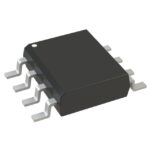 DMT6017LSS-13
The activity of extra discounts on wholesale prices is in full swing…
Please fill in your contact information and we will send you the latest wholesale price list.





