 ChipApex | Global Electronic Components Supplier

SEARCH
Search Product
Search Post
— IC芯片 | 连接器 | 传感器 | 被动器件 —
Search productSearch post
— IC芯片 | 连接器 | 传感器 | 被动器件 —
Consult the customer manager about the wholesale price.
consultation hotline:86-132-6715-2157
email:[email protected]
Contact the product manager for consultation. One-stop consultation is available.
Do you want a lower wholesale price? Please send us your inquiry and we will reply immediately.
The DSC8123CI2 is a programmable MEMS oscillator manufactured by Microchip Technology, housed in a QFN-4 package. It operates within a supply voltage range of 2.25 V to 3.6 V and supports frequencies from 10 MHz to 460 MHz. The device features LVDS output format with a frequency stability of 25 PPM and a load capacitance of 2 pF. It functions reliably across an extended temperature range of -40°C to +85°C. The component utilizes SMD/SMT mounting and has a maximum duty cycle of 52%. This series is designed for applications requiring precise timing solutions with low power consumption.
Verify the specific suffix codes to confirm the exact frequency, package type, and temperature grade required for your design. Ensure compatibility with the I2C programming interface during integration. Check for moisture sensitivity levels and reflow soldering profile requirements to prevent damage during assembly. Confirm that the selected variant meets all regulatory compliance standards for your target market.
Choose this component when LVDS outputs and 25 PPM stability are required within the specified voltage range. Consider the QFN-4 footprint constraints and thermal management needs for dense PCB layouts. Evaluate the need for programmability versus fixed-frequency alternatives based on production flexibility requirements. Ensure the operating temperature range aligns with the environmental conditions of the final application.
The DSC8123CI2 belongs to the DSC8123 family of programmable MEMS oscillators. This series is known for its small form factor and ability to replace multiple crystal oscillator variants. It integrates the resonator and oscillator circuitry into a single chip, reducing board space and simplifying inventory management for manufacturers producing various timing solutions.
Direct replacements may include other members of the DSC8123 family with different suffixes indicating varied frequencies or stability grades. Cross-referencing pinout and electrical specifications is essential when substituting with similar MEMS oscillators from other manufacturers. Verify that any alternative part supports the same LVDS output and I2C programming capabilities.
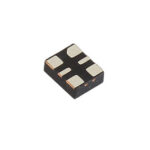 DSC8123CI2

The activity of extra discounts on wholesale prices is in full swing…
Please fill in your contact information and we will send you the latest wholesale price list.





